
Jennifer Henion joins me on the podcast today for a conversation about hunt tests — what they are, how she wound up focused on them, and managing the culture that comes with them.
5107 Hits
5107 Hits
Jennifer Henion joins me on the podcast today for a conversation about hunt tests — what they are, how she wound up focused on them, and managing the culture that comes with them.
Hélène joins me to talk about the power of start buttons, stop buttons, and arousal checks when training our dog sport behaviors... and our life skills.
Have a problem when you want to do your dog's nails? Or maybe for you it's some other aspect of grooming or vet care! In this episode Deb and I talk about cooperative care training — what it is and why it matters.

Staying in heel position is a fundamental behavior in rally and obedience training. To ensure your dog maintains heel position throughout a course, building value and enthusiasm for being in that position is essential. In this blog post, we'll explore engaging games to increase your dog's excitement and success by finding and staying in the heel position. You'll enjoy happier and more successful performances by teaching your dog these games!
Join Teri Martin, Melissa Breau, Hélène Lawler and Sara Brueske for a conversation about the "other" dog sports offered at FDSA — treibball, herding, and disc!
What do you do when your agility startline breaks down? Whether your dog is the type to anticipate their release, stress sniff, freeze, or leave the line to visit the volunteers, this episode with Nancy is the one for you!
Generalization is a crucial aspect of dog training that enables dogs to apply learned behaviors in various situations. When teaching a new behavior, the environment and cues significantly shape the dog's response. However, if the cues are too closely associated with specific contexts, the dog may need help generalizing the behavior. In this blog post, we will explore the concept of generalization and provide practical tips on teaching dogs to respond to cues regardless of the environment or contextual cues.
If you've thought about leveling up your personal fitness level so you can be a better dog sports competitor, but have been consumed by "yeah buts" (yeah but my knees... yeah but my age... yeah but my weight) this podcast is for you!
What is prey drive anyway? Tracey McLennan has spent years studying prey drive in our canine companions and this week she joined me to talk about what it is, why we breed for it, and both the pros and cons of having it in our dogs.
Julie joins me to talk about the importance of building enthusiasm into your heelwork right from the start, and how to avoid (or overcome!) training plateaus during the process of training your dog a beautiful heel.
Join me, Crystal Wing, Denise Fenzi, Hélène Lawler and Jane Ardern — all presenters in the upcoming High Drive Dog Conference — for a honest conversation about the best and worst parts of living with and training high drive dogs.
In this episode, I interview Canine Bodyworker and Scent Work Trainer Aleks Woodroffe on the benefits and application of canine massage for our sports dogs.
The level of fitness a dog needs to do well in obedience is often overlooked - but the level of core work and conditioning required for obedience exercises shouldn't be ignored. In this episode Petra and I talk about her approach to keeping her dogs fit for obedience.
It's rarely talked about — but intra-household dog-dog aggression is more common than many realize. Join me and Michael Shikashio for a deep dive into why, what to do, and how you can prevent issues.
Is precision important to you in rally or obedience? It's true, most of us would like our dogs to be precise and accurate! Sometimes, however, the way we go about achieving that goal of precise behaviors can affect the dog's attitude. So how can we get both precise behaviors and happy dogs?
Traveling with your pup this summer? Looking for other fun activities to capitalize on the awesome summer weather? Sara and I talk about preparing to travel, the benefits of road tripping with a young dog, and more!
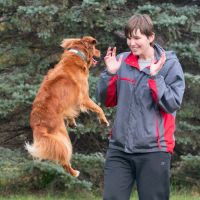
I do a lot of trial prep classes and classes designed to help dogs overcome their trial stress. One plan I hear over and over again from students is how they are going to enter a show for "ring experience." The dog is a bit unsure, and the only plan they know to try is getting the dog into the ring so they can get used to the environment and see that it's ok!!
Unfortunately, going to a trial for the pure sake of getting experience is a plan that usually leads to problems.
Amy joins me for a conversation on managing life with a reactive dog, recognizing the early signs of sound sensitivity... and more!
Location specific reinforcement cues are extremely helpful for improving position while heeling. Because where you deliver the treats affects where the dog wants to be, you can use that to your advantage for whatever tendencies your dog might have.
Reinforcement cues tell the dog that he or she is right. Location-specific reinforcement cues take that a step farther by delivering the reward in a specific way or area, therefore affecting how the dog might perform the behavior in future repetitions. Because dogs are very efficient creatures, they will quickly figure out how to most effectively get the treat. Therefore, they tend to gravitate towards where the treat comes from. If we can be strategic about reward placement, we can affect the tendencies of the dog over time.
Let's look at some common location-specific reward markers in heeling.
By accepting you will be accessing a service provided by a third-party external to https://www.fenzidogsportsacademy.com/
Copyright © Fenzi Dog Sports Academy and individual instructors.
Connect with us! 

