Does My Dog Understand the Cue? How to Know — and What to Fix
It's common to ask, "Does my dog understand the cue?" — especially when a dog performs a behavior perfectly at home but struggles anywhere else. Often, we assume our dogs have a deeper understanding of a behavior than they actually do. When a dog can't perform a cue to criteria, it usually means a building block in the training process was skipped, not that the dog is being stubborn or uncooperative.
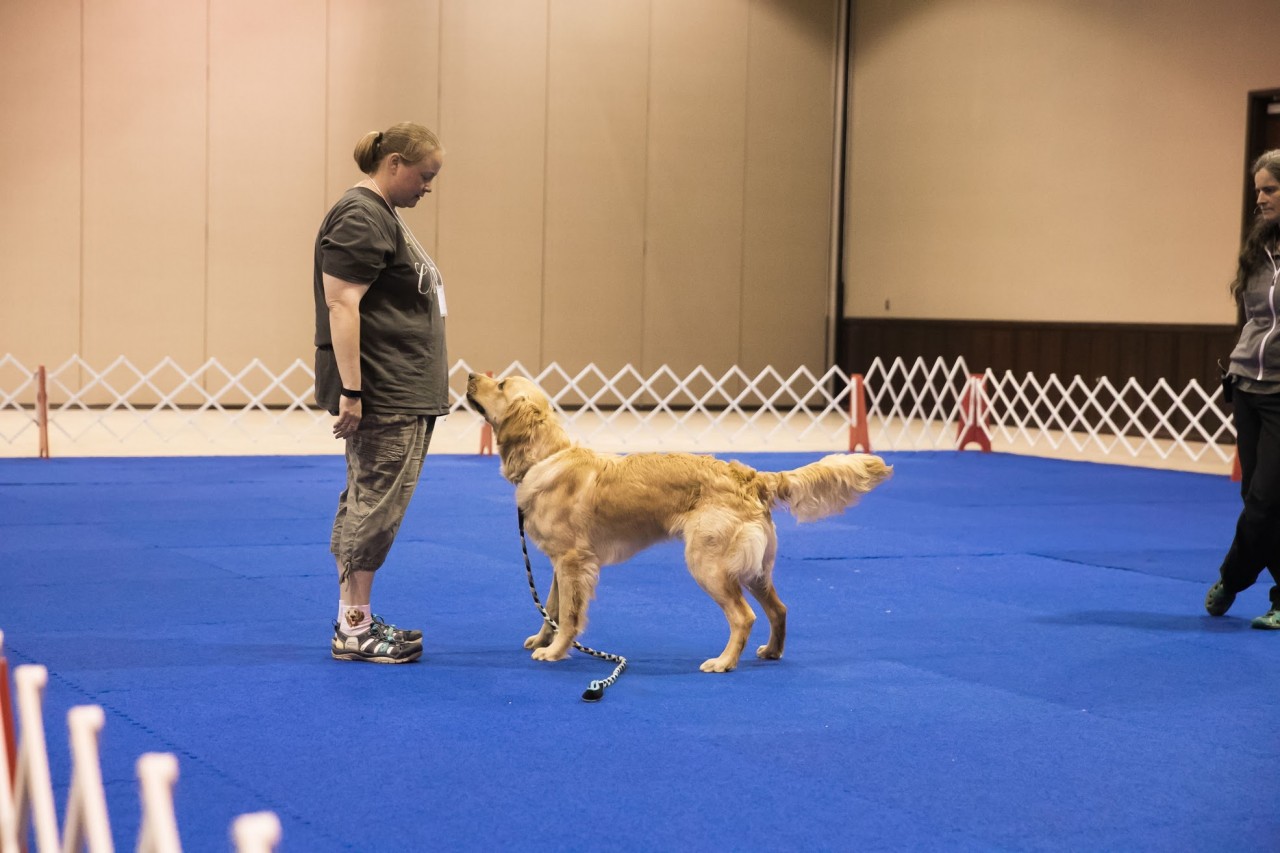
Does My Dog Understand the Cue in a Simple Environment?
Start in a familiar, low-distraction location and cue the behavior. If your dog cannot perform the behavior confidently, accurately, and on the first cue, then the behavior is not fluent. Fluency means your dog can perform:
- Quickly
- Without hesitation
- Without relying on props, food in sight, or extra body movement from you
If your dog can't do the behavior here, slow down and break it into smaller pieces.
Does My Dog Understand the Cue Without Food Visible?
Once your dog demonstrates fluency, evaluate reinforcement. Can your dog respond to the cue when they don't see treats? Many handlers fade food too quickly. Reinforcement needs to be reduced thoughtfully and systematically. Reinforcement isn't about bribery — it's about teaching your dog that the behavior still pays off even when the reward isn't obvious.
Does My Dog Understand the Cue in Different Environments?
Dogs don't generalize automatically. Just because your dog can sit in the kitchen doesn't mean they can sit in the driveway, at the park, or in a training facility. Take the known behavior and practice it in new locations:
- Different rooms in your home
- Indoors vs. outdoors
- A parking lot
- A familiar training building
Each new environment requires going back a step and rebuilding confidence and fluency.
Does My Dog Understand the Cue Around Distractions?
When you introduce distractions, do so gradually. There are multiple types of distractions:
- Environmental (new surfaces, smells, noises)
- Social (people and dogs)
- Motion (moving objects, runners, kids, toys)
If your dog is distracted by one specific thing, address that distraction individually. If your dog is overwhelmed by everything, decrease the difficulty and rebuild clarity.
Does My Dog Understand the Cue in a Behavior Chain?
If your dog can do a single behavior but struggles when you chain several behaviors together, the dog may not understand how to transition between cues. Practice short chains of known behaviors in familiar environments before expecting them in harder settings. Reliability should build gradually.
Troubleshooting Checklist
If your dog struggles, ask yourself:
- Is my dog mentally ready to work?
- Can the behavior be performed fluently at home?
- Did I fade reinforcement too fast?
- Did I generalize the behavior to new environments?
- Did I introduce distractions slowly and systematically?
Nine times out of ten, when a dog "doesn't listen," the dog is actually missing one of these steps — not blowing you off.
When you find yourself wondering, "Does my dog understand the cue?", remember that performance is feedback. If your dog struggles, revisit the foundations: fluency, reinforcement, generalization, and distractions. Once those pieces are solid, the behavior will hold up anywhere — even in challenging environments.
About the author

By accepting you will be accessing a service provided by a third-party external to https://www.fenzidogsportsacademy.com/


