“C” the Process of Behavior Modification
As a behavior consultant working in sport, working-dog, and pet-dog environments, one theme remains consistent: we want to set our dogs up for success. Whether we're training for obedience, rally, agility, disc, detection work, or tackling big behavior concerns, positive-reinforcement trainers break training into small, achievable steps. By minimizing mistakes, we reduce stress and build confidence.
To make this simple for dog guardians, I often rely on a simple framework I call the Four C's of Behavior Modification: Control, Continue, Change, and Create.
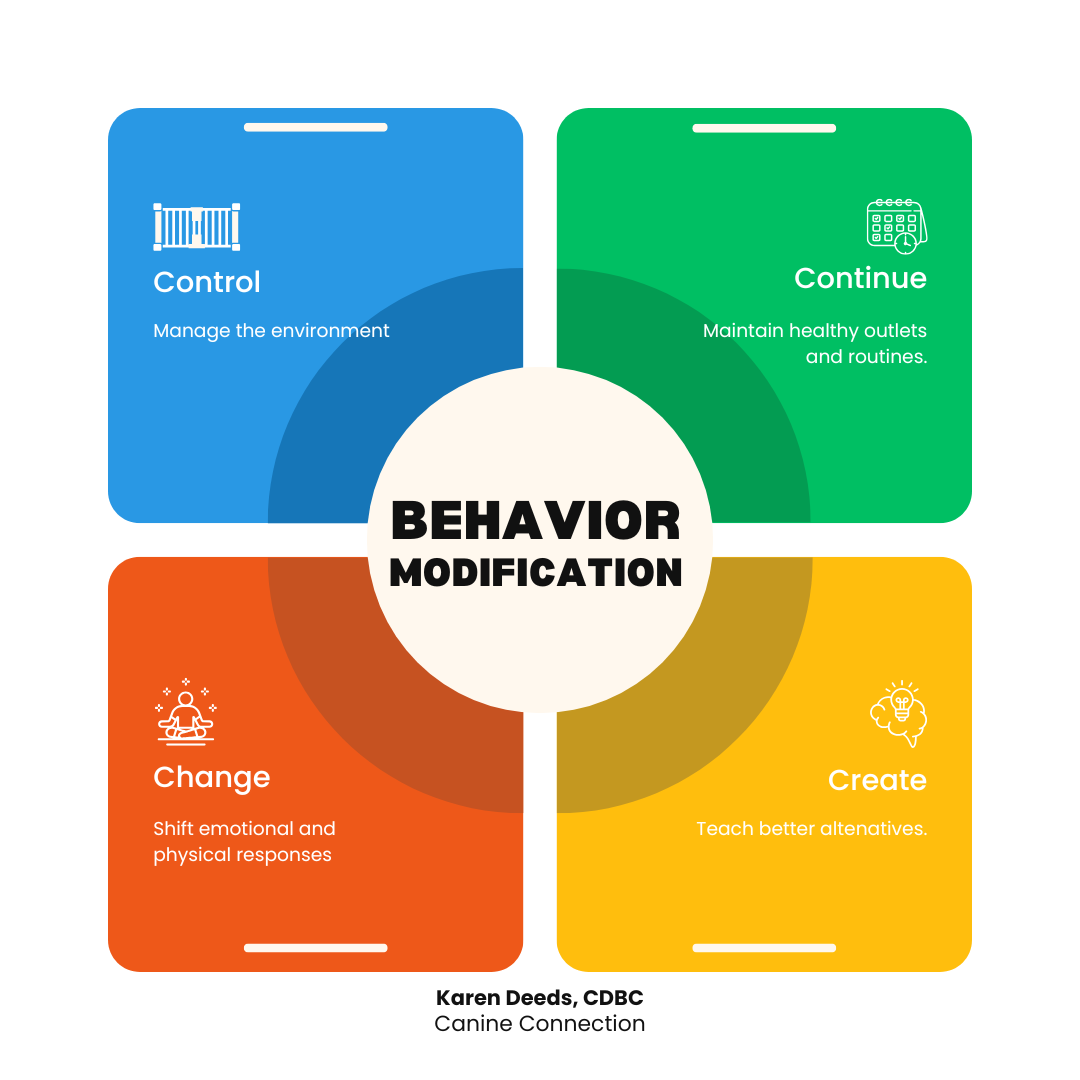
1. Control: Manage the Environment
The first step in any behavior case, is to control the environment – blocking opportunities for the dog to rehearse the behavior we're trying to fix. This isn't about restricting your dog's life. It's about replacing tough situations with ones that support progress. Without this, dogs keep landing in scenarios where 'bad' choices are inevitable…and frustrated humans may assume the dog 'knows better.' Think of it like this: an alcoholic living in a bar won't stop drinking. They need distance from the trigger while learning new skills and stabilizing their emotions. Our dogs deserve the same courtesy – we must keep them 'out of the bar.'
If we skip this step, the dog is frequently put into situations where poor choices are likely. When this happens, guardians may assume the dog "knows better" and resort to punishment. But as the saying goes, an alcoholic living in a bar will struggle to avoid drinking. Until they learn new skills and their body adapts, staying out of the tempting environment is essential. Our dogs need the same courtesy—we must keep them "out of the bar."
Examples of effective management include:
- Feed resource guarding dogs in separate rooms.
- Remove high-value items such as bones or chews unless dogs are separated.
- Block windows or change rooms to prevent reactivity and window barking.
Simply stopping the unwanted behavior from being rehearsed can create a massive improvement on its own.
2. Continue: Maintain Healthy Outlets and Routines
Management doesn't work alone. We must continue meeting the dog's physical and emotional needs. Sniff walks, enrichment, fitness work, structured play, and predictable daily routines all help lower stress and anxiety. A stable emotional state makes learning easier and behavior change faster.
3. Change: Shift Emotional and Physical Responses
Next, we work to change how the dog feels about the trigger or situation that elicits the undesired behavior. This often involves:
- Desensitization - gradually exposing the dog to the trigger at a tolerable level
- Counter-conditioning - pairing the trigger with something positive to eliminate fear or anxiety
- Differential reinforcement - teaching and rewarding alternative responses to reduce frustration, conflict or behavior not rooted in fear
When the emotions shift, the behavior shifts. We're transforming the dog's internal state, not just the outer actions.
4. Create: Teach Better Alternatives
Finally, we must create appropriate behaviors to replace the unwanted ones. Ask yourself: What do I want my dog to do instead? If we don't teach this clearly, the dog is left guessing.
Replacement behaviors might include moving away, checking in with the handler, settling on a mat, targeting a hand or object. These give your dog a dependable script when life gets tough..
The Four C's in Summary
- Control the situation to prevent further rehearsal of unwanted behavior.
- Continue routines and activities that support emotional and physical well-being.
- Change the dog's emotional response through systematic behavior work.
- Create new, appropriate behaviors to replace old habits.
About the author

By accepting you will be accessing a service provided by a third-party external to https://www.fenzidogsportsacademy.com/


