Your Dog Isn't the Problem: The 3 Real Reasons Rally Mistakes Keep Happening
You've put in the work. Your dog knows the skills. You've practiced the signs, you've drilled the heeling, you've done the homework. And yet, the same mistakes keep showing up, in training, on course, in the ring. The lag that won't go away, the crooked sits, or the dog who checks out right when you need them most.
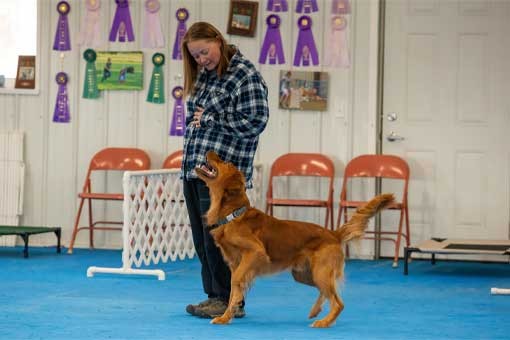
It's easy to start wondering what's wrong with your dog. Or, honestly, what's wrong with you.
Here's what I want you to consider: probably nothing. The mistakes aren't a character flaw in your dog or a reflection of how good a handler you are. They're information. And once you learn how to read them, everything changes.
Mistakes Are Trying to Tell You Something
When a position error shows up in your heeling, or a front falls apart, or your dog disconnects between signs, that's not your dog being difficult. It's your dog telling you something. The mistake itself isn't the problem. It's a signal pointing back to a cause, and the cause is almost always one of three things.
Before you reach for a fix, it's worth asking why. Because if you don't know why the error is happening, you're guessing. And guessing often makes things worse, not better.
Root Cause #1: A Clarity Problem
Your dog doesn't have a clean, consistent picture of what the behavior is supposed to look like.
This one is tricky because it can happen even in dogs who have been training for years, but it is actually very common, especially in rally. Criteria shift gradually. Reinforcement is a little inconsistent here and there. The picture gets messy without anyone noticing. Dogs are incredibly good at learning patterns, but if the picture isn't consistent, the gaps show up under pressure.
A dog with a clarity problem isn't being stubborn or lazy. They're doing their best with an incomplete picture. The fix isn't more repetition of the same thing. It's going back and making the picture cleaner.
Take lagging as an example. A lot of handlers assume their dog knows heel position and is just choosing not to stay there. But if the picture of where 'heel' actually is has never been pinned down clearly, your dog is making their best guess. In training, that guess might look close enough. In the ring, under pressure, it shows up as a lag that costs you points and leaves you wondering what went wrong.
Root Cause #2: A Reinforcement History Problem
Where and how you've been delivering your rewards is shaping your dog's position, whether you intended it to or not.
Dogs go where the reward comes from. That's not a training philosophy, it's just how learning works. If your treats have been coming from in front of your body, your dog has been learning to position themselves forward and wrap around your body. If your rewards have been given too far from your leg, your dog has been learning that heel position is farther from you. If your training sessions follow a predictable pattern, your dog has been learning the sequence rather than the cues.
Forging is one of the clearest examples of this. A dog who consistently pushes ahead in heeling is often a dog whose reward history has been forward. They're not being pushy on purpose. They're going where the cookies have always come from. Shift where the reward comes from and is delivered, and the position starts to shift with it.
This is one of the reasons video is so valuable. It's almost impossible to track your own reward placement in the moment. Watching it back, you'll often see patterns you had no idea were there.
Root Cause #3: A Handler Mechanics Problem
This one is the hardest to see, because you're inside your own handling.
Your footwork, your body position, your timing, your cue delivery, all of it is communicating information to your dog, often before you consciously realize you're sending a signal. A subtle lean. A hesitation in your step. A cue that comes half a second late. These things add up, and they show up in your dog's performance.
Wide heeling is a perfect example. Many handlers drift slightly left into their dog's space without realizing it. The dog moves away from the pressure to avoid getting bumped, and over time they learn to stay out wide as a default because it feels safer. What looks like a wide heeling problem is actually a body pressure problem. And no amount of drilling heel position will fix it, because the dog is doing exactly the right thing in response to what the handler is doing..
Handler mechanics also show up in ring performance. A lot of handlers move differently when the stakes feel higher. They tighten up, they slow down slightly, they hold their breath. Their dog, who is an expert reader of body language, responds to all of it.
Why Pressure Reveals Rather Than Causes
One more thing worth understanding: a new environment, a busy building, a judge standing close, these things don't cause problems so much as they reveal them.
If your dog falls apart under pressure or checks out when something interesting walks by, one of those three root causes is the weak link. Maybe the behavior was never as solid as it looked at home. Maybe the reinforcement history is too thin to hold up when the environment gets harder. Maybe your own mechanics change when the stakes feel higher, and your dog is picking up on every bit of it.
When things go sideways in a new place or around distractions, it's worth asking which of the three just showed up.
The Most Important Question You Can Ask
Before you change anything in your training, get in the habit of asking one question: is this a dog problem or a handler problem?
It sounds simple. It is simple. But it's genuinely the most useful diagnostic question in rally training, because the fix for a dog who doesn't understand heel position is completely different from the fix for a dog who understands it perfectly but is responding to something you're doing with your body. Treating one like the other wastes time and can create new problems on top of the old ones.
Two dogs can show the exact same error for completely different reasons. A dog lagging because rewards have been placed behind the handler's hip. A dog lagging because they're feeling environmental pressure. A dog lagging because the handler decelerates before every halt and the dog has learned to read that signal. Three different lags, three completely different fixes.
This is why drilling more of the same thing so often doesn't work. If you've misdiagnosed the issue, you can spend weeks practicing the wrong thing.
Where to Start
If you've got a mistake that keeps showing up no matter what you try, here's the exercise I'd suggest before your next training session. Watch video of a recent session and ask yourself three questions.
Is my dog's picture of this behavior actually as clear as I think it is?
Where have my rewards been landing, and what position has that been reinforcing?
What am I doing with my body right before this error happens?
You don't have to have all the answers. You just have to start asking the right questions. Because once you know why something is happening, you can fix it with confidence, and more importantly, you can keep it fixed.
About the author

By accepting you will be accessing a service provided by a third-party external to https://www.fenzidogsportsacademy.com/


