Course Details
3 WEEK CLASS - Whether our dog is mugging us for food, struggling to ignore food containers, or refusing to work when food isn’t visible, the underlying problem may be surprisingly similar: food itself has become part of the cueing picture, and its presence or absence is determining what our dog does next.
Our goal is to help our dog learn that the presence of food and access to food are two very different things, while also ensuring that the food itself isn’t needed to cue or generate the goal behaviors. We want our dog to respond to the cues that tell them what behavior to perform, understand the information that tells them when and how reinforcement will become available, and recognize when food in the environment is simply irrelevant, so the best strategy is to ignore it and keep working.
In this class, we’ll look closely at what our dogs are actually learning about food during training. We’ll consider how food can accidentally become part of the information controlling behavior, how unclear training can contribute to frustration around food, and why apparently well-established behaviors can become fragile when food moves, disappears, or becomes more difficult to access.
For some teams, the challenge starts the moment food appears. Our dog may jump, grab, snatch, bark, bite at our hands or clothing, or become so focused on gaining access to the food that productive training becomes difficult. We’ll look at how to create clearer routes to reinforcement so that our dog can learn that mugging, grabbing, or escalating isn’t necessary in order to make food available.
For other teams, the difficulty is almost the reverse. Our dog may work readily while following a lure, focusing on a reverse lure, or moving toward a visible bowl, remote feeder, or other pre-placed reward, yet struggle when that picture changes. We’ll work on separating the food from the information that tells our dog what behavior to perform, strengthening our actual cues, and developing ways of generating behaviors that don’t depend on visible food.
We’ll also help our dog develop the skills needed to maintain focus and accuracy while ignoring food in the environment. That may mean establishing the ability to leave a treat container outside the ring and move away from it to work without repeatedly checking back or returning to it before we are ready. It may mean heeling past food distractions, working confidently with food containers on the ground, or continuing a scent work search when food is present in the environment.
Across the three weeks, we’ll develop practical strategies for using food more effectively in training. We’ll work on food reward marker cues, reducing grabbing and frustration, building the ability to work around food containers and distractions, fading lures and other food-based prompts, reducing dependence on visible or pre-placed rewards, and helping our dogs understand when food is relevant, when access to it is available, and when it simply isn’t part of the current task.
Teams will enter the class at very different points. Some may begin with a dog who mugs them the moment food appears; others may have no difficulty working around food but struggle to perform the same behaviors when food rewards aren’t obvious; while others may be working toward competition skills where food needs to be left outside the ring, passed on the ground, or ignored while another task is performed. The practical exercises are deliberately designed to accommodate those different starting points.
The overall goal is to use food more effectively, so that it supports clear, confident training rather than becoming something our dog needs to see, follow, grab, return to, or continually think about.
Teaching Approach:
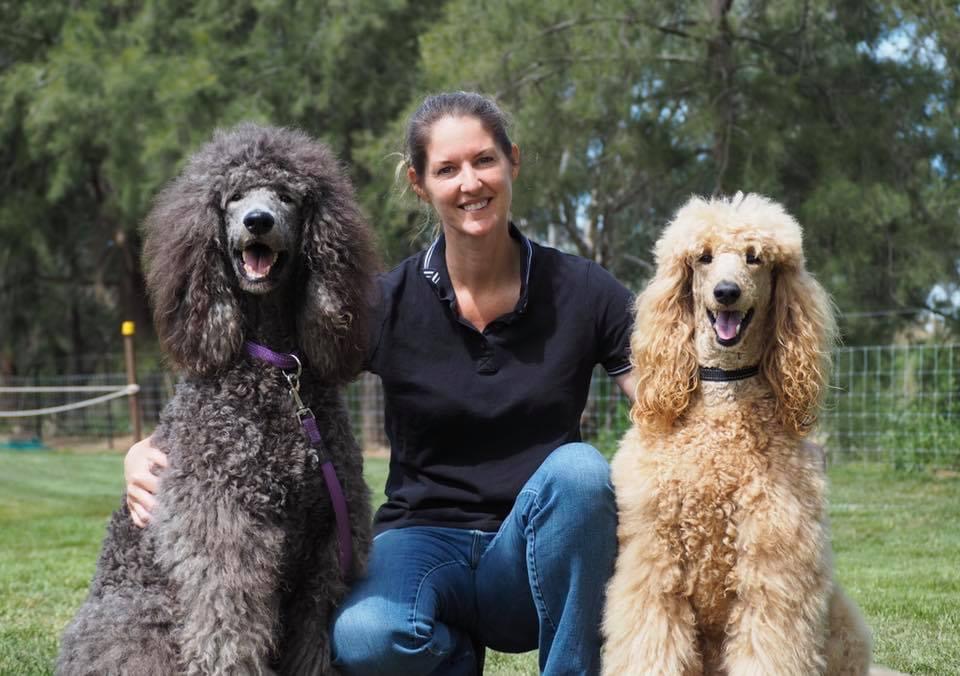 Instructor: Sharon Carroll
Sharon (she/her) has been a professional animal trainer for 30 years. She has been both a presenter and trainer in a range of animal shows, and currently operates, a dog training and behaviour consulting business based in Newcastle, Australia. (Click here for full bio and to view Sharon's upcoming courses.)


