E471: Julie Symons - Handling Your Nosework Dog
Wondering what it actually means to be a good nosework handler? Join Julie and I for a conversation on how your handling impacts your nosework dog and what you can do to become as good at your role on the team as you expect your dog to be at theirs.
Transcript
Melissa Breau: This is Melissa Breau and you're listening to the Fenzi Dog Sports Podcast brought to you by the Fenzi Dog Sports Academy, an online school dedicated to providing high quality instruction for competitive dog sports using only the most current and progressive training methods. Today I'll be talking to Julie Symons about handling skills for nose work competitors. Hi, Julie. Welcome back to the podcast.
Julie Symons: Hi, Melissa, thanks for having me again.
Melissa Breau: Absolutely. Super excited to chat about this. So before we dive into kind of our main topic, can you just remind everyone a little bit about who you are, who your dogs are, a little about you and your background?
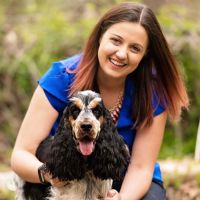
Julie Symons: Hi. Yeah, hopefully most people know who I am. I am a full time faculty member at Fenzi Dog Sports Academy and I own my own training business called Savvy Dog Sports.
I teach agility, nose work, and occasionally some puppy classes. And I've also been hosting some nosework trials and all of that keeps me really busy.
Melissa Breau: I bet. So when you're thinking about kind of gets our main topic when you're thinking about good handling for nose work, you know, what does that mean to you? What is the handler's role during a search? I mean, it's definitely more than we might realize.
Besides some of the obvious mental prep ahead of time and making sure that you're rested and hydrated and, you know, organized with all your equipment and treats and stuff. Handling involves being patient and observant and being aware of our movements. And it also requires decision making, you know, how and when we might make a suggestion or when we might need to support our dog if they're off task or they're worried.
So there's a lot going on during those few minutes in the search. And it's why it could make people feel really rushed and difficult. Difficulty with making some of the decisions we might need to make. So somebody's listening to this, you know, how can they evaluate how well they're currently doing or kind of how well it's going maybe while their dog is searching? You know, what kind of questions should handlers be asking themselves in general about their handling and then, you know, specifically maybe after a search?
Julie Symons: Yeah, the best way is to video. You know, we say that all the time about any kind of training. And then you should review your video. I often tell my students that one thing I enjoy when I wind down for the day and I get in bed or maybe watch a TV show or something, I look at my phone and I look at my. What I videoed that day, whether it was my agility class or a search off site.
And you want to watch that at least. You know, you want to watch it at least. And then I would suggest that you even go the next step and narrate it. Now, if you have the, the technical ability to do that, it's really useful to kind of verbalize what you're seeing, because we can just look at something and still just like, not really have a clear picture of what we're assessing.
But if you actually verbalize what you're seeing and if you want to just do it without narrating it, like capturing the narration, but just watching it on a big screen and really looking at what's going on, I mean, that's what we do when we go to a seminar and another instructor is reviewing our work. Or if you come to a class, you could obviously work with, you know, working with an instructor or a skilled friend when you go out to train and having some of those eyes on you to give real time input is really useful.
But that's the best way. You can't never, you can't never review your searches. I mean, I think a lot of people don't review. I really do. And there's so much benefit in reviewing what you've done and then being able to make a plan from that. And people are going to progress better and faster if you do watch your videos and assess some things. So some of the questions that you would want to look for or ask yourself is, are you taking over the search too much?
Are you making too many suggestions? Is your dog checking in with you too much? That usually means maybe you are interrupting them too much. Are you moving too much? Are you kind of being distracting to your dog? We call that kind of noisy handling. Are you moving when you don't need to be and then your dog notices you moving? Right. Because our dogs are very in tune with us and we need to be aware of how much we're talking and our demeanor and, you know, just our movement and how we're supporting our dog.
You have to look at those things and then you can decide, okay, my next search, I'm going to do less of this or do more of that, man. I can certainly sympathize, empathize with the folks who don't like watching themselves on video. I know editing my own videos is definitely not my favorite activity when I'm taking a class or working on things. So it's really true. And what I tell people, as I said, you don't have to show this to anybody.
And I used to actually, for a while, like, use positive training for my students. And if you handed me your camera, I was gonna take a dollar off your, like your price for the class or something like silly like that. And. Or if you didn't hand me your camera, you owed me money or something, you know, just. And the folks who usually never video hand me their phone and you know, we never really did that transaction of money, but they are, you know, videoing themselves more. And I think that was really cool to see.
Melissa Breau: Yeah. Do you typically see handlers act differently in training kind of versus when they're actually at a competition and you know, I'm assuming the answer is yes a little bit here, but, you know, why do you think that happens? Why does it matter that it happens? What should we be thinking about here?
Julie Symons: Sure, I think we can get really comfortable and maybe compliant in like familiar places and familiar classes with the same people.
But we absolutely do our difference. We're going to be more relaxed in training. Although I still find that students notice the eyes on them and maybe they feel rushed if they know another class is about to show up or if their dog is taking more time. And you know, there's still always that little bit of anxiety. I was at a recent seminar and there's definitely, you know, anxiety when you have a bunch of people watching you.
So what I do is I encourage people to work out in public as much as possible. Even set up your camera so that. That's kind of a thing that somebody would. People would notice and wonder more what you're doing. Kind of purposely draw attention to you a little bit. But what we really want to do is kind of like be this, be the same, like kind of quote unquote, be our normal self with our dogs.
I recently posted a video of my young dog at a pop up over the weekend. And my goal for that search was to just be relaxed and kind of normal because I can look back at my videos mainly with a new dog, right. And I'm like, why am I, like rushing? Why am I, I don't know, like, why am I acting the way I'm acting? I've been doing this for so long.
I shouldn't. I should be more. More relaxed or whatever. So I did and it went really well. And so I described that on Facebook and I wrote, you know, our dogs need to be some. Our dogs don't need us to be someone different when we compete. They just need us to be ourselves. And I had been noticing, you know, on social media, people that I know or maybe I didn't know were posting Some videos.
And I noticed how like, cool they were in the, in a trial search. They would, their dog would do something silly and they would just talk to them and they would just respond like they might if you're on a walk or something. And I've been noticing that and I don't think it's anything different. I think it's just that I'm aware of that now with even myself. And so I'm noticing how people are with their dogs when we really, it's really beneficial to our dogs if we're not some, somebody different, you know, all of a sudden out there when we're trialing.
So to just relax and, and take a breath and to support them like we would any other time. So much easier said than done. It is. It is. Yeah. Because things go wrong because things go wrong when you didn't expect them and then you're like, oh my God, I don't know what to do. And you kind of panic when instead of spirals. Right. You're, you're a little anxious and you're a little concerned and you're acting a little weird.
So your dog's a little concerned and acts a little weird and then you're wondering why your dog's acting weird. And it just. Yeah, I remember when I took my wheel off. Yeah, I remember when I took my inbot Katniss to her first trial, as in like a local AKC trial. And she was struggling in this exterior and I'm like, okay, I'm going to make sure I reconnect with her.
And when I watched the video back, I literally spent three seconds doing that. And I'm like, what, what was wrong with me? Like, why did I, why did I feel so rushed? And I think we all comment that the time seems to go so much faster during the search. And I try to explain it to other people and apparently to myself. Time moves at the same speed, you know, all the time.
So. And I think it's our pressure to do well, like especially being an instructor, there's pressure on me. And somebody said to me recently that being in an instructor's dog is really difficult for the dog. And we are so worried about the outcome that we're not focusing on the moment and what our dog actually needs.
Melissa Breau: Yeah. How can kind of planning out and having a consistent handling strategy help with some of that and reduce maybe some of those trial nerves?
Julie Symons: Yeah, I talk about that a lot. When I changed my handling to a more consistent way, I followed the, started following the dog driven search by Sue Sternberg and Dana Zinn. And it just gave me kind of a systematic way how I would move and respond to my dog. And it relieved so much of my anxiety on how to handle and what I was going to do, because we can really panic when we worry about, you know, how to cover an area or how I know when to call finish, or what do I do with this hat, you know, whatever.
So having this consistent method can really help take a lot of that stress off your shoulders going in there. And it was, like, nine days for me, and it still took me. And it's. I mean, I'm still working on it, but it took me, you know, a long time to get that more consistent. And then one day I realized I went into a search area, and I didn't have to worry about that.
I just had my method of how I was going to follow my dog and respond to them. And it did make me a lot less nervous. It was really cool.
Melissa Breau: Can you talk a little more about how your handling has changed over the years? But also, you just hinted at a big change there.
Julie Symons: Yeah, so it's changed a lot what we used to do, and everybody did it. We used to back up a lot when our dog was. Was sourcing a hide, even at getting. Getting the hide or sourcing a hide. And we were told that early on by. By a good advice from some of the judges, because we were really crowding our dogs. And so. So along the way, you know, some people said, oh, so that you don't crowd your dog. You should back up.
And that was. At the time, it was kind of. It was good advice because it would make us think about not. Not crowding our dog. But what's happened is that became a really bad habit. Really bad habit. I still see it today where. And I do it, you know, very small. It might be a lean back. It might be a half a step backwards. I still have that carryover.
And we don't have to back up because backing up is suggesting a direction, and our dogs will notice that. And if you back up a whole lot, the dog comes right out with you. So I remember I was one of my classes was working on close hides, and so people would send me their video, and they'd have two close hides, and I want them to feed the first hide and then stand there and then have the dog cast off and find the other hide.
And they would, just by habit, they would back right out of the screen. So you like. So I have the dog and the handler in the view of their video. And then after the first hide, the handler backs out and the dog followed, followed her. And they were everybody, there was nobody in the video. And then the dog had a kind of work their way back. So that was actually a really good example, example of how they didn't mean to do that.
It was just habit but how it could really pull the dog off. And the other thing we used to do back in the day is we used to proof our dogs. You know, that probably came from our obedience, you know, background of like so my dog alerted on a container. Well, I don't, you know, I'm not going to trust you because you false alerted before. So I'm going to walk forward and see if you'll pull off, you know, if I try to walk you off of it.
I don't even, I don't do that at all. And I don't even have, I used to have drills, like bad handling drills. I don't even ever, ever proof or practice that we might do that. I just, no proofing, you know, no over, no over, no extra movements that are not needed. So those things that have, have changed. Like I don't see many people proofing anymore that seems to have, have gone away.
The backup is just one of those hard habits but to break. So what started making sense to me was this dog driven search where I would just match the pace to my dog and I would follow them if they moved, I would stop if they stopped and if they turned, I would turn. And I was always, you know, like facing them, facing where they were working, never over rotating or anticipating where they might go.
So those, you know, those changes were quite different, quite different from the past. And I assume they're going well. Yeah, yeah, yeah. And the other thing is I have equated a lot of my handling to my agility days. I would use rear crosses to smooth out like a lane, like a container lane change or I would do a front cross where I would change sides with my dogs to go back down containers.
And they mentioned that a lot in the dog driven search method where it's like the, it's like the opposite. The, the dog is like the handler in nose work and we follow our dog's cue. And whereas in agility, you know, the handler is setting where you're going to turn, where you're going to go, where you're going to decel, where you're going to, you know, speed up. And so it's just kind of like our roles are reversed.
And it just makes so much sense to me because I don't know where I got this other analogy. It's like you're connected to your dog with a rubber band. And so you're. You're always, you know, you're always in, you know, connected. Sometimes you're closer, sometimes you're further away, but you're never losing that, like, rubber band effect with your dog. And that's. That's been, I think, a great way for me to explain it, that it's. It's very similar to how we communicate with our dogs in agility, just our roles are reversed.
Melissa Breau: I like that thought. If somebody's listening to this and going, okay, maybe I really need to improve my handling, where would you, you know, kind of encourage them to start?
Julie Symons: So, as I mentioned, the very first thing I do talk about is pace matching. Because a lot of times what happens is we are really out of sync with our dogs.
We're either stop, stand in one place while the dog does the whole search. Not that that's a bad thing or a wrong thing, but then sometimes you want anchoring to mean something, and it can't mean two different things. So what I like to practice is that if the dog is moving, you're following, and if the dog slows down, you slow down. What can happen, though, in that approach is a lot of times we don't stop fast enough when our dogs stop.
And I'm guilty of that. So I was told to lean back in my heels and kind of walk on the heels of my feet, but we do. You can tend to crowd your dog a little bit and maybe be a little bit too close because you're not matching your pace. So that could be, you know, an implementation, you know, error of the system if you. If you keep moving when the dog stopped, and then you kind of, you know, pop their bubble.
And we also need to be aware of our movement. Are we moving with intent? Are we unconsciously turning to get a hide that we know is somewhere or rushing our dog and pulling them off areas? Because we think we have some bias of where we think something might be or we actually know where it is. So that's the number one thing I see. I taught a lot of classes last week here, and I'm trying to picture my students and.
And when they really did give their dog the empowerment to cast out and move and match their pace, it's something we're always working on and along that same line to help improve handling. Is. This is a great one, too. Is we tend to keep our dogs in our artificial boundaries, and so what I've really been encouraging my students to do is to have a boundary list search areas.
I mean, in reason, right? Like, you don't let your dog cross a road, or if somebody in the area with a dog, you're not going to just let them, you know, go up to the dog or something. But what happens is if you're working in this container area, but the dog wants to go over to the wall or go over to some objects, you know, we tend to call them back in.
I also had a search a couple months ago where the dog had finished searching this room. They had found all the hives. It was an unknown number, and the dog tried to leave the room, and the handler called them back in and made them search more. So all what that does is inhibit your dog from casting out, which is what we want. We want them to want to explore and find odor.
But if we are constantly calling them back in, which is giving them a little bit of a clue, like, no, there's nothing over there if you're doing a training thing and you know where the search area is. So when the dogs are so, so clever, they're so aware of what we do, they read us like a book, right? So that's kind of like a newer thing I've been focusing on.
It's something I've had as a drill for many, many years. But kind of realizing the full impact of every time we do call them back in from a boundary, we're taking a little bit of their initiative to cast out. When in the name of the game, when you get to higher levels, larger areas, we need them to cover the area and we need them to take the lead on that. We need them to want to cast out and not think they're not supposed to.
Melissa Breau: So if somebody's working on their handling, what do they need from their dog to actually be able to develop better handling techniques?
Julie Symons: That's a really good question because it aligns with what we just talked about. Because we can't do this alone, right? We need the dog's role to support that. So we need them to be odor driven.
You know, we can call it the, you know, odor driven, you know, handling method, but we need them to cast out, to want to cast out and to try to find threads of odor to source hides. And I do this by using the wind if you're outside, or fans if you're inside. I'm going to boost that odor by blowing the odor down to where you're starting. Or I might use lot of odor.
I tend to like put out a lot of odor. Like a whole jar of Q tips. You know, if anything at least just triple or quadruple the amount of odor that you're using just to really boost it. It's just going to help the dog. It's going to, it's going to help you be able to practice some of your handling. When the, when the odor is so clear to your dog, especially if you need to have the odor further away so that you can have more area to move around in.
You want the dog to be catching some information and working to that. So that's the one way I would do it. Another way I do is early on, ideally before they're on odor too much. Like if I was teaching a brand new class, the first thing I would have them do is do some food scatter searches. So either in a medium sized space, I would just put some food around and the dog, we would let the dog go and wander and find food and you would practice your handling.
Or I would do a very cluttered area which is so great for like puppies and stuff. So the puppies get to climb and explore and kind of build confidence to go under stuff, to get the good treats and to climb stuff. And you're right there, you're right there in the picture. So the dog's getting used to your proximity and that's just such a great way to help to build some of those handling techniques.
So that's what I do to try to help that. Because if the dog's not moving and the dogs may be a little bit lower drive or it's hard to handle and a lot of times, and me included, my current dogs tend to be a little more methodical. My previous dogs were a little, were faster and I am impatient. I think that's why I've been commented on that I'm a little too close to my dog because I'm like trying to move them along a little bit.
They're moving perfectly fine. I just have to, to match my pace a little bit better and kind of, you know, don't be so, so in a rush but. And with experience is going to come speed. And you know, the more and more we do this and we set up the right, the right drills and stuff. So those are always things that are going to help. But it is harder, I would say with a slower dog and with a dog that's very methodical.
Like dogs who really want to check everything and so dogs who want to check everything, then we have to go the other way of Saying it's got to be about odor, not about objects. So then there's drills. That's why I use the fans. And the more odor and the wind to really make it clear this is where odor is. Don't have to go bother checking all the unproductive areas.
Melissa Breau: So I'm sure people are listening to this and going, you know, that kind of isn't much advice I've heard before or, you know, whatever. It's not super uncommon for competitors to take classes from different instructors or attend seminars with different presenters. How do you kind of merge or handle it when you're getting maybe really contradictory advice from two different professionals that you respect?
Julie Symons: Yeah, it's a really common situation in any sport. And I think I read just in my upcoming class, somebody who introduced himself, mentioned that specifically, said, I specifically have questions about how to handle different handling advice. And first we should explore working with other instructors and getting other ideas. I relish when my students tell me that they're taking another course with somebody because I don't want to be fully responsible for everything that they. Well, not. I mean, not in that way, but I think.
Yeah, but I think every instructor sees things, see some things and doesn't see other things. And I think that it's really good to get some other eyes in your dog. But it is true that it can be difficult when the advice contradicts each other. So first, what I tell people is to. If you are seeking out that person for their advice, you need to respect that and you need to be open to their ideas and to try it.
Nothing that we do in handling. Well, there might be some things I wouldn't want to do, but for the most part, if it's some minor tweaks, like a minor tweak to what you're already doing can definitely complement what you're doing. So I think you need to be. If you're there seeking out their advice, you should give it a try and explore it yourself. And then what you want to do is decide if that makes sense to you and make sure to ask why something is being proposed.
I get that a lot. Not as much now, but years ago, it was kind of interesting. I was doing around the same amount of time, and a couple students say, and handling isn't just our movement. It's do you cue your dog to find another after they find a hide. And I had a couple students in one period of time say, not cue their dog to find another and their dog.
They always did. And then they. I said, oh, how come you didn't tell your dog to find another. I said, well, you told us not to. I'm like, no, that wasn't me. You know, that's never anything I would say. And, and I said, but I know a lot of people don't. I said, so why did, why did somebody tell you not to? And they didn't know why. They didn't know why.
And so I did actually continue on figuring out why, and I kind of got a reason which was valid, which I think was, in that case, was there may not be another hide. So I could easily argue that because just because you say search again doesn't mean that there is a hide. That doesn't have to be our definition of what that means. But anyway, so if you don't understand why, then you can't make a decision about it.
And I think we just tend to blindly take somebody's advice and we don't totally understand either the benefit or something or maybe the drawback of something that we're doing or what we're doing and they're suggesting not to do. And it's tough because instructors come with their biases and their, their experience. Don't even call them biases. It's. It's what they've seen and experienced. So, you know, it's, it's take it and, and keep it or take it and leave it, you know?
Melissa Breau: Yeah. When you're, when you're doing that, when you're kind of playing with new ideas or trying something new for somebody's recommended, you know, how do you evaluate whether that new handling idea is, is worth keeping? If you try it and it works once, how do you look at it and maybe go, you know, this actually really helped. Or just, you know, well, that worked the once, but maybe it's not really a great idea for my.
Me and my dog. Yeah. Actually, one thing I forgot to say on the last topic, which is related to this, is if you are trying to do multiple ways, that's gonna. I definitely suggest people not to try to switch back and forth or try one one way and try one the other way. That's completely different because that's gonna really, really cause confusion with your process and your team.
So one thing I would do is when you evaluate, are you taking something new that contradicts another definition or another rule that you want to keep. So you want to make sure that you're not trying to do multiple different ways at once, and people really do try. And what happens when people try to mix of different ways? Because I think the different methods involve move more movement or less movement.
Right. So you all of a sudden start to switch halfway, and then you're actually so erratic with your movement that that's usually something that that could happen. And what I would look for. So what I would measure or look at when you're reviewing your runs, is not if your dog finds all the hides, but is something that you're doing preventing them to find a hide. Or. Or was your search so successful because you completely suggested where every hide was because you were running known hides?
So those are things that you need to evaluate. I see it all the time. I see it all the time where people suggest productive areas and they call their dog off of unproductive areas. You've got to really, really watch that. And I would just also make sure that you are. A biggie would be if. And this is what I see a lot is so the handler finally decides, I'm going to make a suggestion.
Because they're processing a lot of things at once, but they decide to make the suggestion right as their dog is showing some behaviors of picking up odor. But they don't see it because their brain has already decided that they're going to pull them somewhere else. And then you pull your dog off odor. And that's the thing I see the most when people are trying to not let the dog drive the search.
And that's not wrong to make a suggestion. What happens is we tend to not observe properly, and that takes skills. Right. So I'll say you have to, you know, become a savvy handler, a handler who can read the dog's odor skills. And that's like a whole topic on its own, Right. So once you can. So if you're patient and you're observing, but you're really observing how your dog is behaving, are they picking up speed?
Are they zigzagging things? There's a lot of behaviors that a lot of instructors cover. You could Google it. You know, a lot of tells, they call it tells that the dog tells you that they're. That they're in odor, and that's not the time to interrupt them. So. So that's the timing of it on for handlers to make sure that you are truly making a suggestion when the dog really needs it, not when the dog is actually like on the way to a hide, you know, and it's hard.
It's hard, especially in a. In a trial environment. Oh, so what I started doing, I haven't done it lately. Well, I've done it lately, but not recently is I started having another student in my class talk, narrate the person running. So one of my teams is running, and then I'll have somebody narrate it. We were trying to have this. The handler narrate as they're searching, but that was very challenging.
So I would have the team before them would narrate not just the dog's behavior, not about being close to a hide, about to find a hide, just their behavior. And it was hard to find that language for them to learn how to describe what their dog was saying. So that's a skill that. That's why I mentioned earlier about narrating your searches that you've done. Trial or training, you'll start to learn, oh, I saw.
I see now that my dog was an odor. My dog didn't need me to intervene. And so that's the main thing that I would be watching, is your dog's behavior in blank air, in unproductive areas, and in areas with odor. So. And I think the other thing I would evaluate is, did you support your dog when they got stuck? You know, they get stuck or worried. It happened to me.
I went to a weekend seminar with Holly Bouchard, which was great. And that's my, like, once a year time I get eyes on me, you know, because I'm the instructor, and I get a little rusty. And there was one search that Drac had done really well. I forgot to go over my dogs at the beginning, But Drac is my summit level dog. He's almost 11, and he just stopped.
And I. I'm not used to him stopping, but I had noticed he's been doing that in trials, and I think it's just complex. There are complex searches, or he's hot, he's tired, or he's been searching for five minutes, and Holly said, just give him a break. Love on him. And I. And I. And Drac loves to be loved on. And that's one of my techniques when he gets distracted, like, if he's.
Oh, my God, he got stuck on a smell. But I didn't, like, transfer that to. He just needed a break. And so I loved on him and sent him off. And he just went off like a cannon. And. And just. And we ended him. We ended with him actively searching instead of ending when he stopped, you know, so that was really cool for me to, you know, rewatch that back and to get that feedback real time.
So. And I'm finding with my young dog, Cat, who's 2 years old, recently got her nose worked, too. She's still very, very green. I need to find ways to connect with her more. She's concerned in her environment with people and checks in with me a lot. So I'm learning to embrace, be that normal person to her and say, it's okay, it's okay if you need to acclimate a little bit right now.
And I give her that time. So it's just continually evolving, you know, with every dog you get. And no matter how long you've been in the sport, it's. It takes a lot to continue to keep your handling at the level that you need it to be. I like the. There's a saying, and I don't. I don't know who to attribute it to, but, you know, there's always somebody better than you, and there's always somebody behind you, and all you can do is kind of aim to be the best.
The best you. You can be in that moment, you know, constantly improving. But I had a thought in there while you were talking about the video review that, you know, especially when you're. You're searching unknown hide placements, you know, I can imagine how powerful it would be to have the video afterwards, because then you can look back and say, you know, even though you didn't know your dog was in odor, in the moment when you watch the video back, you know where the odor is because your dog hopefully found it.
And so you can then reevaluate their body language and their cues. And it's so different than other sports where, you know, you have the information of what you're supposed to do when you start. Whereas with nose work, you maybe don't know exactly what the dog should be doing at every single step when you're starting. You don't know until afterwards, I guess you were talking about it, and I don't think that had snapped into place for me necessarily.
And thinking about it, it's like being able to actually, you know, the things you only know in retrospect, well, guess what? There's a lot about that in those works. Well, you think about a lot of other sports, we are controlling it. We're controlling the obedience routine. We're trying anything, and it's change. Those work is the opposite. We have to trust them and we have to build that drive and willingness to explore and support that.
Support that as well. And we don't always. And something that you just said made me think of something is we tell people, oh, you shouldn't run a lot of blind hides. You should run known hides. So then you could really learn but when people run known hides, they tend to handle differently. They have. They unconsciously, you know, will. Will influence hide areas and they like, for example, they'll not everybody, but they'll re.
So if the dog isn't finding a hide but they're near it, they'll say search. So I see that a lot where they'll say search when their dog is near it. So I've seen dogs who will only look for odor when you say search, because they've learned you say search when they're near it, which is bizarre, you know. And then the other is people who. I just lost my train of thought, they might, you know, call them off of a boundary and.
Oh, no. So with the. No. So yeah. So if they're running known hides, then they're going to very influence a little bit. So they'll influence with their body or they'll say search. But then on unknown is really good to get some of that. I think it's good to do more. I think it's okay to do more blinds. Not, you know, maybe do equal or something, but you should do blind searches, but then blinds.
You just have to review your video afterwards to really see that picture. I remember one of my students years ago, I kind of was. So as I listened to myself on their video, I'm like, oh my God, I sound so mean, you know, But I would say like, why did you. Why did you pull your. You just pulled your dog off odor. And they're like, how was I supposed to know that they were going to odor?
And I said, oh, well, because they were. They picked up speed and like, because I knew where it was. That's a problem. Like judges or instructors will be like, you know where it is. So you already have information that they don't have. So I know that that's not helpful to students when you say that, but in that instant, I clearly saw this dog like pick up speed and was like pulling her, like literally pulling her somewhere.
And I saw this at a trial with another team. The dog was literally pulling to a hive, but the handler had their mind to go search somewhere else. And it's. It's again, just those moments of not observing your dog and, and. And the timing of when our brain makes decisions versus it's not always in sync with our dog. Right. Because when our dog is searching and you seeing them not doing anything much important, so you make a decision.
And by the time you decide to do that, the dog did pick up. So there's a lot of that timing of our response Time with our brain and then what the dog is doing in the moment. And it's tricky. You know, newer people that have started nose work that has been super, super competitive and successful in other sports are realizing this is, is tough, you know, to totally trust the dog and to learn how to read a dog working in odor. And that's what makes it so fascinating.
Melissa Breau: So we're talking about this because you're offering nosework, handling insights and improvements in the August term at fdsa. So can you talk a little more about the class? Maybe who might want to sign up?
Julie Symons: Yeah, yeah, it's a great class. I remember how we got the idea to do this because we didn't have a class on handling. And that actually comes up a lot.
People say how come we don't see a lot of topics or products that are fun about handling? And most people would say that, oh, we talk about handling in every class, you know, and we do, but it's not necessarily the focus. So I taught a topic on this at the 2024 FDSA camp and Sarah, Rita was my, my assistant. And the session just went really, really well. And Sarah says, you, Sarah and Terry said you should do a class for Fenzi.
And I'm like, oh, so much work to create a new class. I'm like, oh, I don't know. And so we did. So we got back from camp and what I loved about the process was between New Zealand, Sarah's time in New Zealand, her time zone and my time zone. We were like the 24 hour team. So we, it was, you know, one of my, one of the recent, more recent ones where I really did it right.
I did the outline. We, I, Sarah reviewed a lot of it and we came up with what we wanted to do it in what order. So everything I ever wanted to say about handling, I wanted to get in that class. So we came up with an outline and I just started chugging along right in the, right in the lectures and Sarah would review some of them and Sarah would create some diagrams.
And so when I go to bed, she would get up and then when I would wake up, I would have stuff to review from her and it was like, I'm like, we just like kicked butt. We kicked a butt in a 20. We had 20. We were the 24 hour power team. And yeah, I just really excited for the material and I'm definitely already going to add some more stuff this term about what I mentioned earlier about reviewing my handling and realizing I'm still a little rushed and nervous and I just, I just don't want it to be that important about the outcome.
Although I will never say it's wrong to want to competitively do well. There's nothing wrong with that. But I was like, I, we, the whole point of all of this is our dog will actually do better when we implement some of these things. Instead we do all the other things that almost hinder, hinder the results. Right. The outcome. And instead when we do these kind of things, when you have the better mental, mental picture or the mental prep and you consistent with, you're consistent with your handling and you just kind of take a step back and say, this is my dog search and I'm not going to get involved as much as maybe I did or rush them and learn how to respond to them in a more supportive way and give them that longer than three second break during a search.
And maybe that time I take is going to mean I don't find all the hides, but trying to rush to get the hide almost always. Like you said earlier, spirit, you spiral out of, out of control anyways. Yeah. So it's so easier said than done, as you said. And one thing that I'm doing with my young doc Katniss is she's eligible for nosework 3. Would I say she's ready for nose or 3?
Probably I am, you know, because of my experience. But I can't find other nose work two to be FEOs because they're filling up. So I'm just going to enter her this fall in a noser three. She's definitely ready. She's been showing it in some, some recent training. But I'm gonna go there without the goal of titling and I really want to implement things that I didn't like. What I did in my nosework two searches, panicking, you know, rushing, whatever.
I want to go in there and just work on my communication, my response to my dog and that's going to be my only goal. And it's a local ish trial. It's perfect. And I'm actually really excited about that. And, and I'm really excited about that because we have the skills, I have the experience. Just need to work on this one, this other part of it.
Melissa Breau: Awesome. All right, well, thank you so much for coming on the podcast, Julie.
Julie Symons: You're very welcome. It's been a great discussion. Yeah. Come sign up, you guys.
Melissa Breau: Thanks to all of our listeners and our viewers for tuning in. We'll be back next week, this time with Kelly Daniel to talk about fitness for dog sports. That include a lot of jumping. If you haven't already, subscribe to the podcast either on itunes, the podcast app of your choice, or over on YouTube to make sure you never miss an episode.
Today's show is brought to you by the Fenzi Dog Sports Academy. Special thanks to Denise Fenzi for supporting this podcast. Music provided royalty free by Benson.com the track featured here is called Buddy. Audio and video editing provided by Chris Lang. Thanks again for tuning in and happy training.
Credits
Today's show is brought to you by the Fenzi Dog Sports Academy. Special thanks to Denise Fenzi for supporting this podcast. Music provided royalty-free by BenSound.com; the track featured here is called "Buddy." Audio editing provided by Chris Lang.
Thanks again for tuning in -- and happy training!
About the author
By accepting you will be accessing a service provided by a third-party external to https://www.fenzidogsportsacademy.com/


