Course Details
3 WEEK CLASS - A nose freeze can make it easier to call “ALERT!”, but it is not necessarily the right choice for every dog-and-handler team. This 3-week class is for sniffy teams that want to build, refine, or better understand a nose freeze behavior as a trained final response while evaluating whether it supports their communication and competition goals.
When trained thoughtfully, a nose freeze can provide: confidence in the dog’s source precision, clearer communication at the decision moment, more independent sourcing behavior, and often, less aggressive behavior at source.
Teaching the initial nose freeze is often the straightforward part. The details that make it reliable are easier to miss. We will work on proofing the alert against handler movement, pressure, and verbal cues, then generalize the behavior beyond containers and any training props used to introduce it.
If you have tried a nose freeze before or have been advised against one, you may already know where the behavior can break down. Common problems include:
- The dog responds to something other than odor source, such as handler pressure, movement or stillness, the handler’s gaze, pooled odor on familiar objects, or odor presence rather than source
- The behavior has not been generalized to novel hide placements
- The dog lacks enough repetition or clarity to perform the alert reliably at different arousal levels
One reason I value teaching a nose freeze for a variety of teams is that the work benefits teams even if they don’t fully commit to creating the final trained behavior at source. Through the nose freeze training process, teams still gain a stronger understanding of source value, a clearer response at source, and more confidence in what the dog is communicating. Even if the finished alert includes a look back, the dog learns the essential lesson: nose on source pays and staying at source is worthwhile.
Teaching Approach:
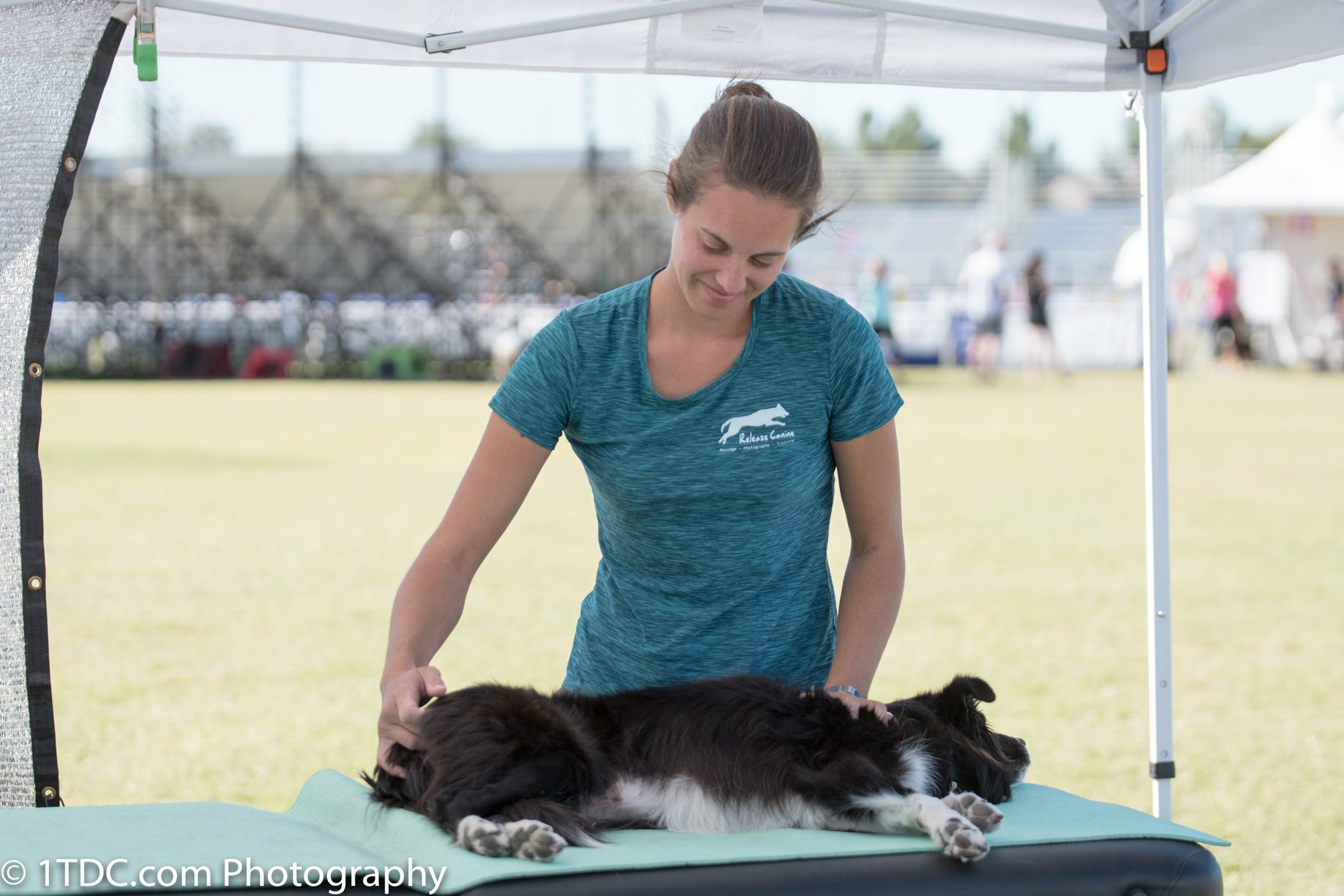 Instructor: Aleks Woodroffe
Aleks Woodroffe (Bsc, CTMT, ACMT) is a Canine Bodyworker and Scent Work trainer in Phoenix, AZ...


