logo

  • Log In
  • Lectures
  • Homework Forum
  • Discussion Forum
  • About Us
  • Calendar
  • Faculty & Staff
  • instagram-icon
  • facebook-icon
  • twitter-icon
  • Courses
    • Schedule
    • By Discipline
    • By Instructor
    • Prerequisites
    • Self-Study
    • Scholarships
    • Gift Certificates
  • Webinars
    • Schedule
    • FAQ
  • Workshops
    • Schedule
    • FAQ
    • Gift Certificates
  • On Demand
    • Pet Dog Presentations
    • Pet Professionals Presentations
    • Self-Study Courses
  • Special Links
    • Podcast
    • Blog
    • Fenzi TEAM Titles
    • Trainer Certificates
    • Private Lessons
    • Other Free Stuff!
    • Swag
  • Conferences
    • Skills & Beyond: Obedience & Rally from the Backyard to Competition! - May 16, 2026
    • CANIS Conference Registration - Attend In-Person
    • CANIS Conference Registration - Virtual Attendance
  • Contact
    • Course FAQ
    • Webinar FAQ
    • Workshop FAQ
    • Testimonials
    • Contact Help
  • Courses
    • Schedule
    • By Discipline
    • By Instructor
    • Prerequisites
    • Self-Study
    • Scholarships
    • Gift Certificates
  • Webinars
    • Schedule
    • FAQ
  • Workshops
    • Schedule
    • FAQ
    • Gift Certificates
  • On Demand
    • Pet Dog Presentations
    • Pet Professionals Presentations
    • Self-Study Courses
  • Special Links
    • Podcast
    • Blog
    • Fenzi TEAM Titles
    • Trainer Certificates
    • Private Lessons
    • Other Free Stuff!
    • Swag
  • Conferences
    • Skills & Beyond: Obedience & Rally from the Backyard to Competition! - May 16, 2026
    • CANIS Conference Registration - Attend In-Person
    • CANIS Conference Registration - Virtual Attendance
  • Contact
    • Course FAQ
    • Webinar FAQ
    • Workshop FAQ
    • Testimonials
    • Contact Help

AG315: Precision Charged Weave Poles - Where Energy Meets Accuracy

  • Overview
  • Syllabus
  • Prerequisites & Supplies
  • Sample Lecture
  • Testimonials & Reviews
    • Registration
      Apply for a scholarship

  • See Also
  • All Classes
  • All Workshops

AG315: Precision Charged Weave Poles - Where Energy Meets Accuracy

Course Details

Over the years, I have seen a need for a different approach to teaching and handling dogs during weave pole training. The typical approach is to keep things simple and gradually build the dog's performance into 12 closed poles. Most dogs learn weave poles fairly quickly, but eventually start making mistakes because they never learned how to navigate the poles without handler assistance, position, or easy straight-ahead or handler-assisted pathways.

Many dogs learn to slow down to enter correctly. When the dog starts trialing, the weave performance can start reasonably well. The dog is still thinking a lot, and speed hasn’t increased.

Dogs that pick up speed and confidence with their weave performance while trialing can have issues using their bodies to enter the first gap correctly. Their timing is off, the entry is missed, a pole gets skipped, or the dog will pop out when they can’t hold on to the eventual angle into the next gap. Trainers refer to this as a need for the dog to learn how to “collect”, but (in my opinion) this isn’t exactly what the dog needs to learn. If you watch well-trained dogs with beautiful, independent weave entrances, there is a weight shift right before the dog positions itself for the entry. Because of this weight shift, dogs occasionally add a collection stride, but the weight shift causes this, and I don’t believe teaching dogs to collect will solve weave pole entry issues.

When speed increases, the mistakes gradually erode the dog's confidence. The many incorrect responses, poor handling, and negative responses from the handler further cause weave performance stress. Once that sets in, it can be more challenging to fix the weave performance.

I've used a modified 2 x 2 method to teach weave poles to all my dogs, and with a few adjustments over the years, I have been highly successful using this as a base. Plenty of other trainers successfully teach weave poles to their dogs using channels, wires, gates, or cages. Everyone eventually gets to the same place. My thoughts are not to change others' approaches but to strengthen my own. 

My goal for teaching weaves to my young Border Collie, Vici, was to develop a procedure that increased energy, enthusiasm, and movement into and out of the weaves, while setting her up to learn how to use her body to find the entry, stay in until the exit, and focus ahead on the exit. We have worked through many common weave issues (incorrect entries, skipped poles, and exits) while she has lots of drive through the poles. 

If you have a dog with weave stress at the trials or a dog that struggled learning weave performance, this class can build back confidence in both of you. If you have a young dog ready to train weaves and want to try a different approach, I'd love to show you one that is fun for both of you. 

I have videos of all the stages with my young Border Collie, Vici (a medium dog). As others work through this class, videos of dogs with different personalities and different sizes will be added to the lectures. 


Listen to the following FDSA podcast, where I discuss my thoughts on weave pole training and why there are so many performance issues for dogs at the trials. 

https://fenzidogsports.libsyn.com/e419-nancy-little-weave-pole-performance

Teaching Approach

This class takes a step-by-step approach to building weave pole training. Each step will have written instructions and at least one video example. Lectures are released in one batch at the beginning of the week. Feedback will be mainly written, but occasionally, voiceover videos help the student understand subtle changes that are difficult to describe. 

This class will have a Teacher's Assistant (TA) in the Facebook study group to help the Bronze and Silver students. Directions for joining that Facebook group will be in the classroom after you register.
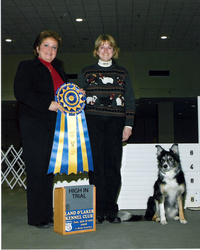
Nancy Gagliardi LittleInstructor: Nancy Gagliardi Little

Nancy Gagliardi Little (she/her) has been training dogs since the early 1980s, when she put an OTCH on her Novice A dog, a Labrador retriever. Since then she has put many advanced obedience titles on her dogs, including 4 AKC OTCH titles, 6 UD titles, 3 UDX titles, and multiple...(Click here for full bio and to view Nancy's upcoming courses)


Syllabus

View Full Syllabus

Week 1

  • Goals
  • Weave Framework Skills
  • Build the Weave Framework Sequence
  • Begin Closing the Weaves
  • How to Handle Mistakes - Early Training

Week 2

  • How to Progress
  • Speed and Self-Regulation
  • Close the Weaves - Getting the Bend
  • How to Handle Mistakes - Getting the Bend

Week 3

  • The Process of Fading Guides
  • Vary the Line to the Entry
  • Add Rear Cross
  • Increase to Six Poles
  • How to Handle Mistakes

Week 4

  • Strategy for Building Confidence for Six Poles
  • Continue Building Robust Weave Entries
  • Distractions - Handler Movement and Position

Week 5

  • Strategy for Building Fluency for Six Poles
  • Generalization Strategies
  • Continue Building Robust Weave Entries
  • More Distraction Training

Week 6

  • Add Another Set of Six Poles
  • Add Short Sequences Before the Weaves
  • Training for Early Exits
  • Strategy to Introduce (or Reintroduce) Weaves to Trialing
  • How to Handle Mistakes in Trials

Prerequisites & Supplies

View all Prerequisites & Supplies

Prerequisites

Dogs must be 12 months or older.

Supplies and Equipment

The following is a list of required Items for this class

Reinforcer

  • Tug toy
  • Food toy

You must be able to throw the reinforcer or have your dog grab the tug toy from your hand—no hand feeding. If you don't have a food toy and want to get one, I have some recommendations below.

The following food toys or vessels are recommended and can be purchased on Clean Run.

  • Treat Hugger: http://www.cleanrun.com/product/treat_hugger_treat_holding_fleece_dog_toy/index.cfm
  • The Clam: http://www.cleanrun.com/product/the_clam_treat_dispensing_training_dog_toy/index.cfm
  • Lotus Ball mini: http://www.cleanrun.com/product/mini_lotus_ball/index.cfm
  • Lotus Ball small: http://www.cleanrun.com/product/small_lotus_ball/index.cfm
  • Lotus Ball medium: http://www.cleanrun.com/product/medium_lotus_ball_dog_toy/index.cfm

Weave Poles and Guides

  • Weave Poles
    • Preferred, 2 x 2s - Three sets of 2 x 2 weave pole bases - 24" between poles. The lightweight bases (aluminum) will be fine if you have a small or medium-sized dog. If you have a medium or large dog, the 2 x 2s should be heavy enough to remain in place when your dog touches or hits a pole. If it's a lighter-weight set, they must be staked (outdoors) or double-sided taped (indoors) in position.
    • Alternatively, channel weaves. A set of four adjustable poles is required in the early stages of training. Eventually, a set of six adjustable poles will be required.
  • A set of six closed weave poles, or use the three sets of 2 x 2s.
  • Four (minimum) guides to attach to the poles – some dogs may require two additional guides, but this is rare. 

Check with your friends to see if they have 2 x 2s and weave pole guides you can borrow for this class. If you have a medium to large dog, ensure the bases are not light or can be staked down.

Otherwise, here is a list of businesses that make the equipment. I have experience with Clip and Go, and I highly recommend their guides. I do not have experience with the 2x2s that are listed below. But they come recommended by others. The business that makes the 2x2s I use is currently not able to take orders, but I will add it here when they are up and running again.

Weave Pole guides

Clip and Go Agility:

https://clipandgoagility.com/clearway-weavepole-guides-for-6-poles-4-guides/

24" 2 x 2 weave pole sets

Clip and Go Agility

https://clipandgoagility.com/clip-and-go-agility-2-x-2-weavebase

These bases are aluminum and lightweight and will need to be secured for medium to large-sized dogs. 

MAD Agility

https://www.madagility.com/product-page/24-2-x-2-weaves-6-colored-poles  

These bases would work best for large or medium-sized dogs with a lot of forward drive, as they are made of powder-coated steel. They usually have them in stock, and they come with colored poles. The business owner said that if steel prices continue to rise, he will need to increase prices.

Mark's Agility Equipment

https://www.marksagilityequipment.com/product-page/2x2-weaves

These bases are aluminum and lightweight and will need to be secured in place for medium to large-sized dogs. They make them as ordered. At this time, delivery is usually in 6 weeks.

Nosetouch.com

https://nosetouch.com/2x2-Weave-Poles_c_16.html

These bases are made of steel and can be staked or taped down if they move. They can also be ordered with different-colored bases. The website page hasn't been updated to reflect that they no longer default to 20” between the poles. It doesn’t appear that it will be updated, but they make them 24" apart. When you order, tell them you want the 24" spacing in the comments. The business owner states that they usually ship within 2 weeks.

Your Local Welder

Many people get their 2 x 2s by contacting a local welder. If you show them the design, they might be able to make you a cheaper and sturdier version. 

Jumps

Two wing jumps. You can get by with two wingless jumps and two wings (or any object your dog will wrap).


Sample Lecture

More

Lecture 2.0 - How To Progress

The challenge of creating a course for dogs to learn (or retrain) weave performance is that no two dogs will progress at the same rate. Some individuals will require additional steps in the earlier training, which will take a little extra time. Others will progress quickly through the initial stages of this training (appearing as if the training is moving forward quickly), and then progress will slow as the weaves are closed or the guides are faded. The dogs learning weaves for the first time usually take longer getting to six poles than the dogs that are retraining weaves. Your goal as a handler is to trust the process and trust the pace your dog needs for success.


I want you to make a promise to your dog that you will progress at its pace, "listening" to the mistakes, making adjustments based on those needs, and focusing on the present (not the future and how much the dog needs to learn). Teaching your dog to perform weave poles correctly can be frustrating for both you and your dog when they make too many mistakes and reinforcement is withheld or the flow continues to break.


Mistakes start to occur when

  • You help your dog too much instead of allowing the dog to learn to perform the obstacle without assistance. Instead of helping the dog, you adjust the setup so the dog can perform it on its own. When you help your dog too much, it can give you the impression that your dog understands more than it does. And eventually, there will be fallout.
  • You progress too quickly, and the dog makes many mistakes. These mistakes will negatively impact your dog's confidence, focus, trust, and enthusiasm.
  • You train too long. Keep your sessions short and successful. Stop earlier, rather than later. If things start to unravel and the session has gone on for a long time, stop anyway. You don't have to end on success. Continuing to try and get a successful attempt when the dog is already tired can do more damage than quitting when things start to go downhill. You can review the session and return to an easier step.
  • Keep your energy calm and upbeat. This energy level doesn't mean wildly cheering and partying, because that can be distracting and confusing to the dog. There is no need to attempt to energize and speed up your dog. Allow your dog to move at the pace it needs to process the information in front of it. Don't rush your dog's thought process because the speed at which they move forward is usually when they self-regulate themselves (and appear to be SLOW and "unenthusiastic"). Don't try to change the speed - they will need that careful information processing (which slows execution) in the future as they learn to solve the puzzles while increasing their speed. It won't be as dramatic, but your dog needs to do this in a way that feels best for it.


As you start closing the weave poles, progress at your dog's pace to maximize the training. Trust your dog's response. It's okay to have emotions about your feelings on progress, but stay open and curious about why this might be happening. Please refrain from being overly critical of yourself or worrying about your dog's progress. All dog trainers deal with training issues because it's never a linear progression - there are improvements, regressions, and plateaus. That's what is normal for building any complex training skill.


It can be challenging to organize a class progression into steps over six weeks. Releasing all the steps at once so students can work ahead can be demotivating for trainers whose dogs need more help during early training. And it can also distract a trainer, causing them to skip necessary steps (or add more steps) and move ahead too quickly. I don't want either to happen. Given the wide variety of learning styles in dogs, I might suggest a slightly different approach than what is described in the lectures. 


As a general rule, keep moving forward in the steps when your dog has two successful reps in both directions (clockwise and counterclockwise) of the sequence: jump wrap, weaves, jump wrap. Keep the sessions short and end them before you want to. If the dog makes two errors, avoid repeating the repetition without making a change to help the dog succeed. Do this without helping your dog too much with your movement. Usually, this indicates that things have become too challenging and require a change in the setup, rather than excessive assistance with handling.


If you have any comments or questions related to progressing in this class or the organization of the lectures, feel free to post them in the forums or the study group.


Testimonials & Reviews

A sampling of what prior students have said about this class...

We have struggled with weave poles for 18 months and this class is the first time we have made progress that I feel good about and my dog enthusiastically runs out to train now. Instructor Nancy GL reiterated going at your dogs pace several times which was helpful. Excellent written and video instructions and multiple examples of how to do the exercises. Plus videos of mistakes and how to think about dealing with those, which was very helpful. TA Heather helpful and positive in feedback in the FB group.


Such a useful course for us where we are at as novices in this sport and inspiring to watch more accomplished students at Gold level!


Thank you, Nancy, for your amazing course! I learned so much, and it gave me the confidence to reteach the weave to my dog, who had lost a lot of confidence. The amount of information you provided each week was just right, and I especially appreciated the section on handling mistakes — it was incredibly helpful and reassuring. 


I am forever grateful for Nancy's teaching style and emotional support. This was a difficult course for myself and my dog and she was always there to bring me up, offer positive suggests and keep us on the right path. Colleen Meacham                


We made so much progress! Looking forward to working through the rest of the materials. Excellent written and video instruction and examples. Having a TA for Bronze level invaluable so we knew we were on the right track.

Registration

Next session starts: June 1, 2026
Registration starts: May 22, 2026
Registration ends: June 15, 2026

Registration opens at 9:30am Pacific Time. 

SILVER LEVEL Update - Students will be permitted to submit ONE 90 second video each week.  For additional details on all enrollment levels please view our Getting Started section on our Help Page.

AG315 Subscriptions


Gold

Silver

Bronze
Tuition $ 260.00 $ 130.00 $ 65.00
Enrollment Limits 12 25 Unlimited
Access all course lectures and materials ✔ ✔ ✔
Access to discussion and homework forums ✔ ✔ ✔
Read all posted questions and answers ✔ ✔ ✔
Watch all posted videos ✔ ✔ ✔
Post general questions to Discussion forum ✔ ✔ ✖
Submit written assignments ✔ ✖ ✖
Post dog specific questions ✔ With video only ✖
Post videos ✔ 1 per week ✖
Receive instructor feedback on
  • Questions
  • All videos
  • Questions
  • All videos
✖

Find more details, refund policies and answers to common questions in the Help center.

  • Prev
  • Next
  • FDSA
    • About Us
    • What Do We Teach?
    • Faculty & Staff
    • Testimonials
    • Privacy Policy
  • Student Resources
    • Calendar
    • Scholarships
    • Gift Certificates
    • Swag
    • Trainer Certificates
  • Courses
    • Class Schedules
    • By Instructor
    • By Discipline
    • Prerequisites
    • Self Study
  • Webinars
    • Schedule
    • Webinar Courses
    • Register
  • More Learning
    • Podcast
    • Blog
    • Puppy Book
    • Private Lessons
    • Team
  • Help!
    • Getting Started
    • Enrolled Students
    • Video & Images
    • Webinars

Copyright © Fenzi Dog Sports Academy and individual instructors.

Technical support - send email to [email protected]

Connect with us! facebook-icon email-icon instagram-icon