Does your dog struggle to slow down, think clearly, or maintain precision when excitement rises ... or become hesitant, disconnected, or uncertain in new environments? This course helps dogs develop patience, precision, impulse control, and self-regulation through structured pattern games with intentional conditioning exercises. More than a “calming class,” this program teaches dogs how to organize both mind and body for better focus, cleaner movement, and improved decision-making across different levels of arousal. Pattern games create predictability and emotional balance, helping dogs stay engaged and make thoughtful choices. Paired with purposeful conditioning exercises, dogs build body awareness (proprioception), coordination, balance, and strength ... leading to more accurate movement, greater confidence, and improved physical control whether excitement rises or confidence needs support. Ideal for dogs who become overaroused, impulsive, or lose precision under excitement ... as well as dogs who need confidence, body awareness, or support engaging in stimulating environments. Whether for everyday life, fitness, or sport performance, this class builds calmer minds, more organized movement, and thoughtful responses to environmenal stimulus. This class will use written lectures and video demonstrations each week. Each lecture will be broken down into small pieces. There will be video examples demonstrating all exercises included and how to train them. Since everyone has their own learning style, I encourage students to move at their own pace. Each dog and handler are a unique team and I will do my best to meet everyone where they are skill wise. Some fitness equipment will be needed. A place/platform of some type big enough for the dog to sit and stand on. some inflatable equipment/ foam pads, wood pieces, pavers, stacking bars etc we can use for foot targets etc. I am creative and happy to help explore items you likely already have vs buying new things. A quiet place to work indoors is fine, we won't need a ton of space. Ashley Escobar (she/her) has been training dogs and their people for over 20 years. She is a retired college professor of mathematics with a masters of mathematics and also holds a master’s degree in veterinary science, with advanced veterinary coursework and a background in clinical canine rehabilitation also studying animal biomechanincs. ..(Click here for full bio and to view Ashley's upcoming courses)Course Details
Teaching Approach
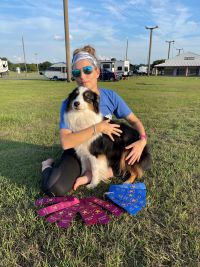 Instructor: Ashley Escobar


