logo

  • Log In
  • Lectures
  • Homework Forum
  • Discussion Forum
  • About Us
  • Calendar
  • Faculty & Staff
  • instagram-icon
  • facebook-icon
  • twitter-icon
  • Courses
    • Schedule
    • By Discipline
    • By Instructor
    • Prerequisites
    • Self-Study
    • Scholarships
    • Gift Certificates
  • Webinars
    • Schedule
    • FAQ
  • Workshops
    • Schedule
    • FAQ
    • Gift Certificates
  • On Demand
    • Pet Dog Presentations
    • Pet Professionals Presentations
    • Self-Study Courses
  • Special Links
    • Podcast
    • Blog
    • Fenzi TEAM Titles
    • Trainer Certificates
    • Private Lessons
    • Other Free Stuff!
    • Swag
  • Conferences
    • The Resilient Canine: Strategies for Cultivating Confidence - November 14, 2026
    • CANIS Conference Registration - Attend In-Person
    • CANIS Conference Registration - Virtual Attendance
  • Contact
    • Course FAQ
    • Webinar FAQ
    • Workshop FAQ
    • Testimonials
    • Contact Help

FDSA Calendar

F3018: Using Food in Training: Changing the Role Food Plays

Course Details

3 WEEK CLASS - Whether our dog is mugging us for food, struggling to ignore food containers, or refusing to work when food isn’t visible, the underlying problem may be surprisingly similar: food itself has become part of the cueing picture, and its presence or absence is determining what our dog does next.

Our goal is to help our dog learn that the presence of food and access to food are two very different things, while also ensuring that the food itself isn’t needed to cue or generate the goal behaviors. We want our dog to respond to the cues that tell them what behavior to perform, understand the information that tells them when and how reinforcement will become available, and recognize when food in the environment is simply irrelevant, so the best strategy is to ignore it and keep working.

In this class, we’ll look closely at what our dogs are actually learning about food during training. We’ll consider how food can accidentally become part of the information controlling behavior, how unclear training can contribute to frustration around food, and why apparently well-established behaviors can become fragile when food moves, disappears, or becomes more difficult to access.

For some teams, the challenge starts the moment food appears. Our dog may jump, grab, snatch, bark, bite at our hands or clothing, or become so focused on gaining access to the food that productive training becomes difficult. We’ll look at how to create clearer routes to reinforcement so that our dog can learn that mugging, grabbing, or escalating isn’t necessary in order to make food available.

For other teams, the difficulty is almost the reverse. Our dog may work readily while following a lure, focusing on a reverse lure, or moving toward a visible bowl, remote feeder, or other pre-placed reward, yet struggle when that picture changes. We’ll work on separating the food from the information that tells our dog what behavior to perform, strengthening our actual cues, and developing ways of generating behaviors that don’t depend on visible food.

We’ll also help our dog develop the skills needed to maintain focus and accuracy while ignoring food in the environment. That may mean establishing the ability to leave a treat container outside the ring and move away from it to work without repeatedly checking back or returning to it before we are ready. It may mean heeling past food distractions, working confidently with food containers on the ground, or continuing a scent work search when food is present in the environment.

Across the three weeks, we’ll develop practical strategies for using food more effectively in training. We’ll work on food reward marker cues, reducing grabbing and frustration, building the ability to work around food containers and distractions, fading lures and other food-based prompts, reducing dependence on visible or pre-placed rewards, and helping our dogs understand when food is relevant, when access to it is available, and when it simply isn’t part of the current task.

Teams will enter the class at very different points. Some may begin with a dog who mugs them the moment food appears; others may have no difficulty working around food but struggle to perform the same behaviors when food rewards aren’t obvious; while others may be working toward competition skills where food needs to be left outside the ring, passed on the ground, or ignored while another task is performed. The practical exercises are deliberately designed to accommodate those different starting points.

The overall goal is to use food more effectively, so that it supports clear, confident training rather than becoming something our dog needs to see, follow, grab, return to, or continually think about.

Teaching Approach:

 At the start of each week, you’ll receive a new set of lectures; several theory topics and several practical exercises. The theory topics explore the concepts behind the training, helping you develop a deeper understanding of your dog’s behavior, and the role food is currently playing. The practical exercises are designed to develop a broad range of skills, with progression across the three weeks.

Both the theory topics and the practical exercises are presented in written form, with short videos accompanying some of the practical exercises to demonstrate specific skills. There is a substantial amount of written information provided in this class, but you don’t need to “keep up” with all of the reading during the class; the theory topics provide more detailed explanations and reference material that you can explore at your own pace, including after the class has ended. Each topic has a clear, descriptive heading, making it easy to choose what interests you and find information again later.

Every practical exercise is self-contained, with enough explanation for you to work through it without first reading the accompanying theory topics for that week. If you’re short on time, or prefer to get straight to the training, you can follow the class through the practical exercises and return to the theory whenever it’s useful to you.

Gold students will work through the practical exercises at their own pace. Not every exercise will be relevant to every team, and you’re welcome to focus on the exercises you believe will be most useful for you and your dog.

Silver students also have a working spot in this class and can choose the exercises that will give them the most value when submitting their weekly video to Sharon for review.

Bronze and Silver students will also have access to a highly experienced and qualified teaching assistant, Jennie Murphy, who can provide personalised feedback on your videos.

All students (Gold, Silver, Bronze) have access to all of the written material for a minimum of 12 months. All students also have access to follow along with the gold and silver students questions, videos, and feedback throughout the class and for a further 6 weeks after the class ends.
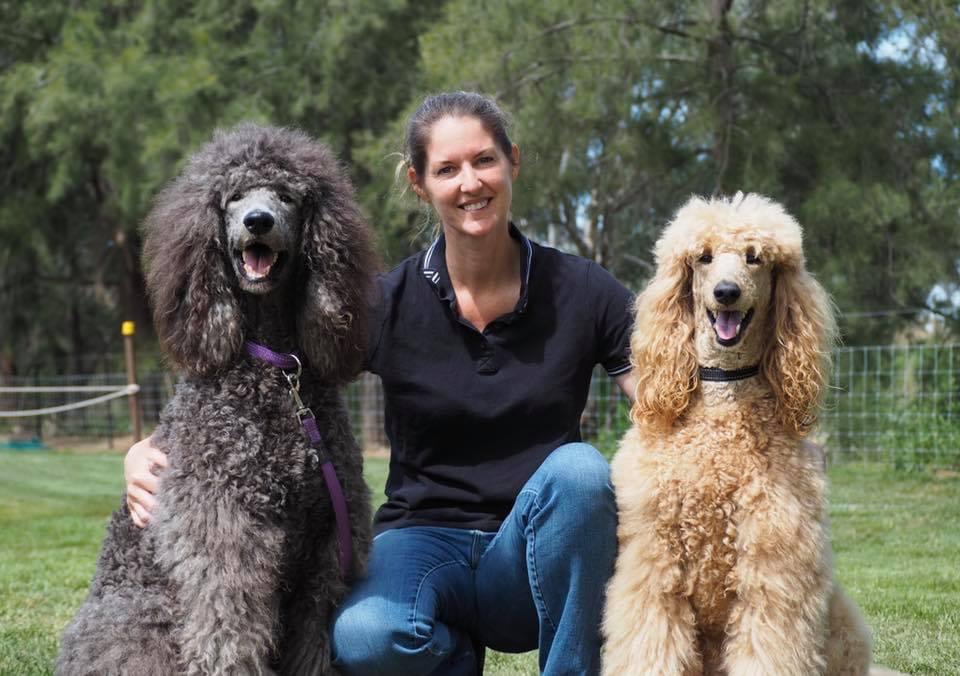
Sharon CarrollInstructor: Sharon Carroll

Sharon (she/her) has been a professional animal trainer for 30 years. She has been both a presenter and trainer in a range of animal shows, and currently operates, a dog training and behaviour consulting business based in Newcastle, Australia. (Click here for full bio and to view Sharon's upcoming courses.)

Syllabus

View Full Syllabus

 This is a brand new class. The theory topics and practical exercises may change slightly as the class progresses.


Week 1: How food influences behavior, attention, and learning.

Topic 1 – The many roles of food.

Topic 2 – Paying attention to food is a default response.

Topic 3 – When food becomes part of the cueing picture.

Topic 4 – Food as reinforcement.

Topic 5 – Reward marker cues.

Topic 6 – Recognizing frustration and helping our dog succeed.

Practical Exercises - There will also be 5 exercises each week that focus on building the skills needed to reliably perform behaviors directly from a handler cue and/or to continue to remain focused on a cued task, regardless of the location, presence, or absence of food.


Week 2: How food placement, access, and training history shape behavior.

Topic 1 – Presence of food versus access to food.

Topic 2 – Why some behaviors are harder in the presence of food.

Topic 3 – How reward placement and reinforcement history shape behavior.

Topic 4 – Why lures and pre-placed rewards work so well, and why they can become difficult to fade.

Topic 5 – Transferring control from food to the intended cue.

Practical Exercises - There will also be 5 exercises each week that focus on building the skills needed to reliably perform behaviors directly from a handler cue and/or to continue to remain focused on a cued task, regardless of the location, presence, or absence of food.


Week 3: Maintaining Engagement, Focus, and Reliability When Food Becomes Less Frequent.

Topic 1 – Why behavior can become fragile as reinforcement becomes less frequent.

Topic 2 – From individual behaviors to sustained work.

Topic 3 – Mental stamina: the factors that change capacity.

Topic 4 – Attention, distraction, and competing reinforcement.

Topic 5 – Working without food: What does ring readiness really require?

Practical Exercises - There will also be 5 exercises each week that focus on building the skills needed to reliably perform behaviors directly from a handler cue and/or to continue to remain focused on a cued task, regardless of the location, presence, or absence of food.


Prerequisites and Equipment

There are no prerequisite skills or equipment for this class. 

Sample Lecture

More

Week 1 – Topic 3 – When food becomes part of the cueing picture.

As we discussed in Topic 2, food is innately attention grabbing. However, its presence can do more than draw our dog’s attention away from other tasks. Food can intentionally or unintentionally become part of the cueing picture itself.

Sometimes food becomes a general cue that engagement and responsiveness will pay off at this time. In other situations, its presence, location, or movement helps generate a specific behaviour. When that happens, the food may also overshadow other cues we intended our dog to learn.

When food becomes part of the cue that work is about to begin.

Sometimes the presence or location of food doesn’t cue one specific behaviour. Instead, it becomes a general cue that tells our dog this is a time when offering behaviours may result in reinforcement.

Putting on our treat pouch, picking up a treat container, reaching into our pocket, or simply holding food in our hand can all become part of that picture.

For some dogs, this may result in them becoming immediately more active and beginning to offer behaviours they believe may give them access to the food. They may sit, lie down, or move into heel position, or they may simply start to spin, bark, paw at us, jump up, or rapidly cycle through a range of different responses.

From our dog’s perspective, this can make perfect sense. If the appearance of food has repeatedly predicted that offering behaviours will result in reinforcement, then the food itself can become a cue that guessing at this time may pay off.

The other side of that learning is just as important. If the presence of food tells our dog that work is available, then its absence can also become information.

Our dog may learn that when we’re not wearing a treat pouch, holding food, or setting out a treat container, there’s little reason to engage with us, offer behaviours, or respond to our cues.

If we have accidentally created a pattern where the presence of food means “remain engaged with us and responsive to our cues” and its absence means “switch off”, it can become a problem when we later want our dog to begin working or remain fully engaged without obvious evidence that food is available.

Food directly generating behaviours and/or overshadowing our intended cues.

Food can influence more than whether our dog is engaged and ready to work. Its location or movement can also help produce the specific behaviour we’re teaching.

Our dog might move forward towards a pre-placed reward, follow a lure into a down, or maintain heel position by following food held beside our body.

In each case, we may see the behaviour we wanted, but that doesn’t necessarily tell us what information our dog is using to perform it.

This is where two related things can happen:

  • The food may be directly generating the behaviour. Our dog is moving towards it, following it, or maintaining a position in relation to it.
  • The food may overshadow our intended cue. We may be saying “go”, “down”, or “heel”, but if the food is the most salient and meaningful part of the picture, our dog may not even notice those words.

As long as the food remains in the picture, the behaviour can look reliable. This can make it difficult to tell how well our intended cue has actually been learned until we ask for the behaviour without the presence of the food.

The following examples show how these two factors can occur together.

Example 1: Pre-placed rewards

Imagine an agility dog learning to maintain forward focus and forward movement regardless of the location or speed of the handler.

A common setup involves a straight line of jumps with a food dish or remote feeder positioned at the end.

The handler releases their dog with a verbal cue such as “go, go, go”, and their dog runs directly down the line of jumps towards the food. Over time, the handler may begin adding a “lead out”, moving in other directions, or remaining completely stationary, and their dog may continue driving forward reliably.

From the handler’s perspective, this can look as though their dog has learned that “go, go, go” means to continue forward over the jumps regardless of handler movement.

However, if the dish or remote feeder has remained in the picture throughout that training, it may be doing much more than providing a reward at the end. It may also be the cue to maintain forward focus and movement.

The dog may not have noticed the verbal cue, or they may have learned that “go, go, go” means “run to the food”, rather than “maintain forward focus and movement”.

In these cases, when we remove the pre-placed food, the behaviour may suddenly fall apart. Our dog may hesitate, turn back towards us, bark, spin, or begin offering other previously reinforced behaviours.

This change gives us useful information: the dish or feeder was an important part of the cueing picture that guided the behaviour.

Example 2: Luring

Luring is another clear example of how food can generate a behaviour while also overshadowing other information.

If we move food in front of our dog’s nose and they follow it into a down, we can see the movement we want. However, that doesn’t necessarily mean our dog has learned to perform a down in response to our hand signal or verbal cue. They may simply be following the food.

A useful comparison is driving somewhere while following GPS directions. We can successfully arrive at our destination without really noticing the route. If someone asks us to make the same journey the next day without the GPS, we may discover that we have no idea where to go.

We completed the journey, but we didn’t necessarily learn the route.

Something similar can happen with a lure. Our dog may successfully arrive in the down position while paying relatively little attention to the other information we hoped would guide that movement in the future.

Holding food in our hand whilst heeling can result in the same outcome. Our dog may walk in a beautiful heel position because they’re following the food. We may be saying “heel” as we walk off, but the behaviour alone doesn’t tell us whether that word has acquired meaning.

If the food is already guiding our dog’s position and movement, our verbal cue may not even be noticed by our dog as relevant information.

Example 3: Reverse luring

Reverse luring can create a slightly different version of the same problem.

Our dog may appear to be performing a very good duration behaviour while we hold food in our hand, or whilst they stare at food in a dish in front of them.

However, their stillness may depend on that food being visible. They may have learned that remaining still is what eventually results in access to it. In this case, the food is directly cueing the duration behaviour.

Whilst learning is occurring, it doesn’t necessarily mean our dog can maintain the same behaviour in response to our intended cue when the food is absent.

Key points.

  • Luring, reverse luring, pre-placed rewards, and remote feeders aren’t inherently problematic; they are all very useful training tools. What matters is recognising the role they play at each stage of learning and systematically fading our dog’s reliance on them as we develop their understanding of the intended cues and behaviours.
  • If food is already visible or being used to direct our dog before they perform a behaviour, a successful response doesn’t necessarily indicate that they understand our intended cue or that the behaviour is fully learned. The food may be generating the behaviour, our intended cue may be contributing, or our dog may not have noticed our cue as relevant information.
  • A useful check is whether our dog can still reliably perform each behaviour in response to our intended cues when food is no longer visibly present ahead of time. If the behaviour falls apart, the food, or the setup associated with it, is still an important part of the cueing picture. That gives us information about what still needs teaching. Our goal is for our dog to receive the cue (without the presence of visible food), perform the behaviour, and then have the reward appear.


Registration

GOLD LEVEL $149 - Students may ask instructors questions and post up to six minutes of video per week for instructor feedback.  Access to all class materials and can post to class forums. 

SILVER LEVEL $99 - Students may ask general questions in the discussion forum and post ONE 90 second video per week (3 total) for instructor feedback. Access to view all class materials and class forums. 

BRONZE LEVEL $49 - Students have access to all class materials and may view all class forums.  

For additional details on enrollment levels please view our Getting Started section on our Help Page.

Three week class will start November 1st and end November 21st, 2026. 

Registration opens October 22nd at 10:00am Pacific Time.

Note:  FDSA anticipates moving to a new website beginning Nov 15.  During this transition the website may be down for 24-48 hours.  Class term will be extended to offset any lost time in excess of 24 hours.

F3018 Subscriptions


Gold

Silver

Bronze
Tuition $ 149.00 $ 99.00 $ 49.00
Enrollment Limits 10 15 Unlimited
Access all course lectures and materials ✔ ✔ ✔
Access to discussion and homework forums ✔ ✔ ✔
Read all posted questions and answers ✔ ✔ ✔
Watch all posted videos ✔ ✔ ✔
Post general questions to Discussion forum ✔ ✔ ✖
Submit written assignments ✔ ✖ ✖
Post dog specific questions ✔ With video only ✖
Post videos ✔ 1 per week ✖
Receive instructor feedback on
  • Questions
  • All videos
  • Questions
  • All videos
✖

Find more details, refund policies and answers to common questions in the Help center.


  • Prev
  • Next
  • FDSA
    • About Us
    • What Do We Teach?
    • Faculty & Staff
    • Testimonials
    • Privacy Policy
  • Student Resources
    • Calendar
    • Scholarships
    • Gift Certificates
    • Swag
    • Trainer Certificates
  • Courses
    • Class Schedules
    • By Instructor
    • By Discipline
    • Prerequisites
    • Self Study
  • Webinars
    • Schedule
    • Webinar Courses
    • Register
  • More Learning
    • Podcast
    • Blog
    • Puppy Book
    • Private Lessons
    • Team
  • Help!
    • Getting Started
    • Enrolled Students
    • Video & Images
    • Webinars

Copyright © Fenzi Dog Sports Academy and individual instructors.

Technical support - send email to [email protected]

Connect with us! facebook-icon email-icon instagram-icon