logo

  • Log In
  • Lectures
  • Homework Forum
  • Discussion Forum
  • About Us
  • Calendar
  • Faculty & Staff
  • instagram-icon
  • facebook-icon
  • twitter-icon
  • Courses
    • Schedule
    • By Discipline
    • By Instructor
    • Prerequisites
    • Self-Study
    • Scholarships
    • Gift Certificates
  • Webinars
    • Schedule
    • FAQ
  • Workshops
    • Schedule
    • FAQ
    • Gift Certificates
  • On Demand
    • Pet Dog Presentations
    • Pet Professionals Presentations
    • Self-Study Courses
  • Special Links
    • Podcast
    • Blog
    • Fenzi TEAM Titles
    • Trainer Certificates
    • Private Lessons
    • Other Free Stuff!
    • Swag
  • Conferences
    • CANIS Conference Registration - Attend In-Person
    • CANIS Conference Registration - Virtual Attendance
  • Contact
    • Course FAQ
    • Webinar FAQ
    • Workshop FAQ
    • Testimonials
    • Contact Help
  • Courses
    • Schedule
    • By Discipline
    • By Instructor
    • Prerequisites
    • Self-Study
    • Scholarships
    • Gift Certificates
  • Webinars
    • Schedule
    • FAQ
  • Workshops
    • Schedule
    • FAQ
    • Gift Certificates
  • On Demand
    • Pet Dog Presentations
    • Pet Professionals Presentations
    • Self-Study Courses
  • Special Links
    • Podcast
    • Blog
    • Fenzi TEAM Titles
    • Trainer Certificates
    • Private Lessons
    • Other Free Stuff!
    • Swag
  • Conferences
    • CANIS Conference Registration - Attend In-Person
    • CANIS Conference Registration - Virtual Attendance
  • Contact
    • Course FAQ
    • Webinar FAQ
    • Workshop FAQ
    • Testimonials
    • Contact Help

FF125: The Adolescent Dog: Making a Terrific Teenager!

  • Overview
  • Syllabus
  • Prerequisites & Supplies
  • Sample Lecture
  • Testimonials & Reviews
    • Registration
      Apply for a scholarship

  • See Also
  • All Classes
  • All Workshops

FF125: The Adolescent Dog: Making a Terrific Teenager!

Course Details

Building Regulation, Focus, and Real-Life Skills for Teenage Dogs


Adolescence is the stage where dogs have big bodies and big emotions, but brains that are still very much under construction. Between roughly 6 and 24 months, it’s common for previously well-trained youngsters to seem inconsistent, impulsive, or become a founding member of the "We Do Not Care" club.... — especially when excitement, movement, or real-world distractions are involved. 


This isn’t stubbornness or training failure. It’s a normal developmental phase marked by rapid brain reorganization, hormonal influence, and the emergence of breed-typical behaviors. Skills don’t disappear — they become harder to access under pressure.


This class is designed to help adolescent dogs learn how to regulate arousal, transition between states, and make better choices in everyday situations. Instead of asking for more control than the teenage brain can reliably give, we focus on recognizing the best ways to support our youngsters when they are having a hard time, and working within their limits to build and retain good habit forming skills. 


Using the LEGS model (Learning, Environment, Genetics, and Self) as a framework, you’ll learn why adolescent behavior changes occur — and how to respond with strategies and lifestyle considerations that make things easier for both of you- even beyond training. 


Each week builds on the last, layering skills that help dogs:

  • Turn excitement on and off
  • Pause, reset, and re-engage during training and daily life
  • Maintain focus around movement, people, and environmental triggers
  • Navigate leash work, greetings, and proximity with more thought and less impulse


Across six weeks, we’ll work on: 

  • Engagement and marker cue clarity
  • Off-switch skills, pause buttons, and interval brain training
  • Games to build arousal up and bring it back down
  • Movement puzzles that support body awareness and emotional regulation
  • Stationing and consent-based skills for safer handling and greetings
  • Leash skills, thresholds, and long-line strategies for real-world success
  • Prevention strategies for common adolescent challenges like jumping and mouthing
  • Understanding the role of hormones and breed-specific tendencies during adolescence


This class is a good fit for:

  • Dogs in the adolescent stage (approximately 6–24 months)
  • Dogs who have some training history but struggle with consistency, impulse control, or focus
  • Sport or active dogs who need better regulation around movement and excitement
  • Owners looking for proactive, skill-based strategies, not quick fixes


This class is not intended for:

  • Dogs with severe aggression or extreme fearful behaviors. 


TEACHING APPROACH

Lectures are released in clusters at the beginning of each week so that students can budget their time in accordance with the amount of reading and training required. Lectures are split into Learning Topics which introduce ideas or concepts which can be helpful for families of adolescent dogs, and Key Skills which provide written descriptions of training exercises, along with short video demonstrations. Videos do not contain any additional voice-over or instructions not already provided in the written portion of the lecture.   


*** We have a brilliant Training Assistant in the class facebook study group to ensure students at all registration levels stay motivated and have help with exercises. ***
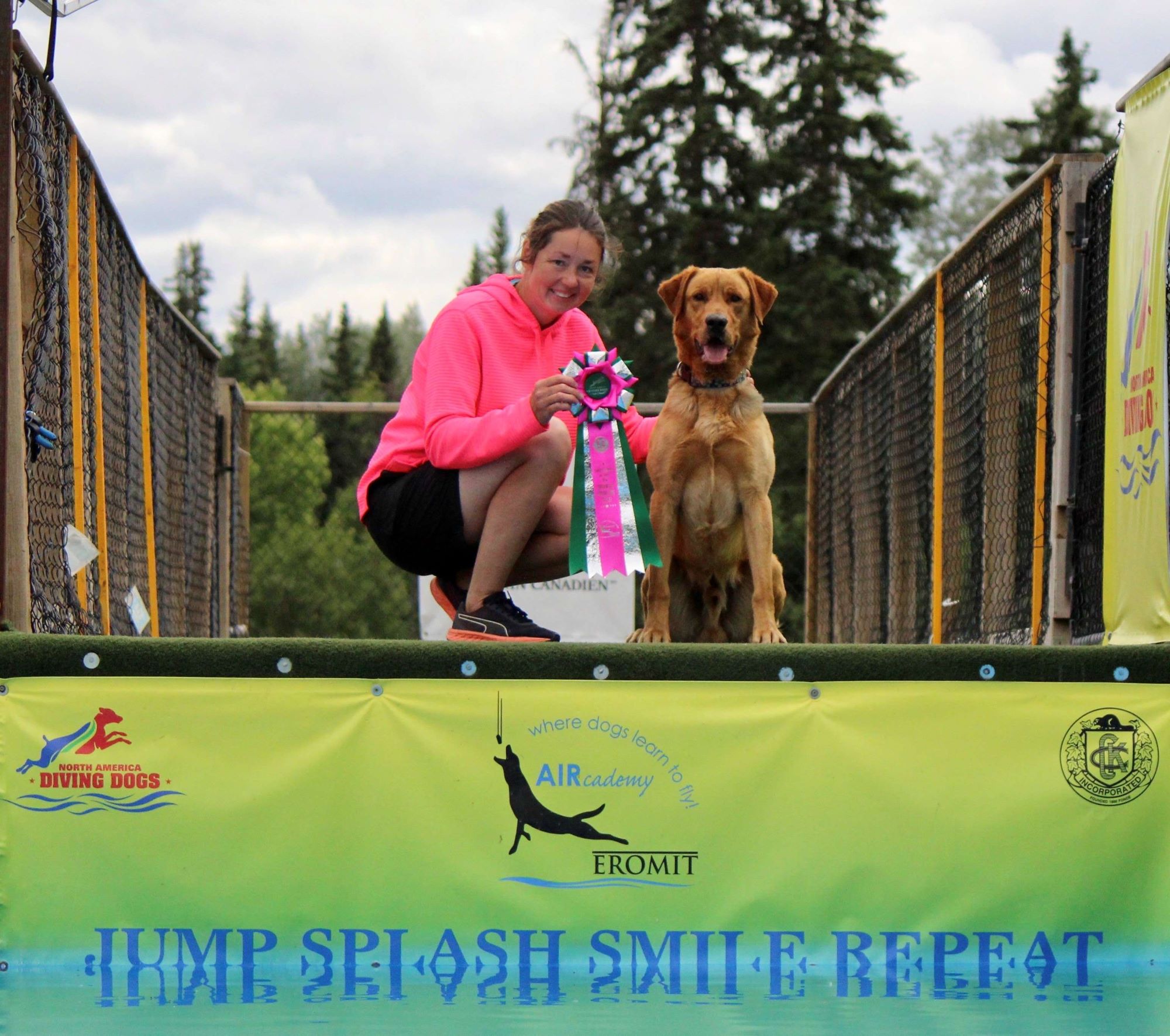
 

Erin LynesInstructor: Erin Lynes

Erin (she/her) is a lifelong dog enthusiast from Quesnel, British Columbia, Canada. Erin is certified as a Karen Pryor Academy Training Partner, a Certified Professional Canine Fitness Trainer, a Licensed Family Dog Mediator, and as a Cani-Fit Leader, ...(Click here for full bio and to view Erin's upcoming courses)

Syllabus

View Full Syllabus

Week One

  • 1.0 L.E.G.S and your adolescent
  • 1.1 How This Class Works
  • 1.2 Marker Cues
  • 1.3 Off-Switch
  • 1.4 Interval Brain Training and the Pause Button
  • 1.5 Engagement Game
  • 1.6 Movement Puzzle 1

Week Two

  • 2.0 Understanding Arousal 
  • 2.1 Arousal Up/Down Game
  • 2.2 Movement Puzzles 2
  • 2.3 Collar Give
  • 2.4 Leash On/Leash Off
  • 2.5 Reporting Behavior 

Week Three

  • 3.0 Behavior Chains
  • 3.1 Proximity Games
  • 3.2 Prevention: Jumping
  • 3.3 Prevention: Biting
  • 3.4 Long Line Walks
  • 3.5 Leash Skills
  • 3.6 Movement Puzzles 3
  • 3.7 It's Your Choice

Week Four

  • 4.0 Breed/Group Specific Behaviors
  • 4.1 Loose Leash 1,2,3! 
  • 4.2 Stationing
  • 4.3 The Consent Test
  • 4.4 Greeting Vs Not Greeting 
  • 4.5 Movement Puzzles 4

Week Five

  • 5.0 Unwanted Behaviors
  • 5.1 Stationing 2
  • 5.2 Greeting People 
  • 5.3 Leash Skills- Thresholds
  • 5.4 Movement Puzzles 5

Week Six

  • 6.0 Hormones
  • 6.1 Proactive Strategies for Teens
  • 6.2  Stationing 3
  • 6.3 Leash Skills- This Way
  • 6.4 Threshold Skills 2
  • 6.5 Movement Puzzles 6


Prerequisites and Equipment

Pre-requisite skills: 

  • Handlers and Dogs will do best in this class with at least a basic understanding of marker cues.
  • Motivational interest in food as reinforcement (dogs with previously trained toy skills may be able to substitute toys for some, but not all, exercises). 

Equipment: 

  • A six foot leash and a longer line (10-15 feet is my preference if you are new to handling a long line)
  • A cot, or bed that can function as a station. A little bit firm and elevated is best as this makes it most easier for our dogs to know for sure when they are on it, vs off of it. 
  • A raised platform- big enough for your dog to sit on it. Something like a Cato board for medium to large-sized dogs. You can also build one yourself by stacking foam puzzle mats (available at any department store) and duct-taping them together. 
  • Two heavier dishes (heavier stainless steel, or ceramic- so that they are difficult to bump out of position)
  • Access to a few low-distraction training spaces and one or two mid-level distraction environments 
  • A container that your dog cannot open (like a plastic sandwich box container) - ideally something your dog hasn't been trained to interact with already. 
  • We will also make use of household objects and items already found in your training spaces- get ready to get creative :) 

Sample Lecture

More

Teaching the Pause Button

While training this behavior, think of it as a Pause Button:

  • Training is not over
  • We are not ending the session
  • We simply want a brief, clear break with no additional behaviors

The behavior should:

  • Pay well
  • Feel easy
  • Become expected during training pauses

Step 1: Build Value for the Prop

Lure your dog onto the prop, deliver a short series of rewards, then cue a release (cookie toss or another clear release strategy).
Repeat.


 Make sure the prop doesn’t move when your dog steps off—brace it with your foot if needed.


Skip this step if your dog already has a strong history with the object.


Video example:


Step 2: Add Short Duration (Up to ~10 Seconds)

Gradually build up to about 10 seconds of stillness, using periodic rewards.
Release before your dog starts offering extra behaviors.

Key points:

  • Reward general stillness
  • Don’t wait so long that the dog starts guessing

Successful process:
Rapid rewards → gradual tapering → timely release


Common mistakes:

  • Rewarding right after movement
  • Waiting too long and getting a flood of behaviors


Tip:
If extra behaviors appear, toss a cookie, reset, reward more frequently, and release sooner.


Step 3: Fade Rewards Gradually

Begin reducing the number of rewards only if your dog can:

  • Stay on the station
  • Avoid self-releasing
  • Refrain from offering other behaviors

If any of those slip, add reinforcement back in.

When to Use It in Real Training

Work through these progressions on their own—but as soon as your dog is solid at Step 2, start using the Pause Button during other training sessions (at whatever level is successful).

Example:
Leroy using a mat Pause Button between retrieve reps


Reps and Sets

For this week, define one set as:

  • 10 seconds work
  • 10 seconds Pause Button
  • Up to 10 cycles maximum

Think: 10 / 10 / 10

That said, success matters more than numbers.

High-intensity exercises (like retrieves) may require:

  • Fewer cycles
  • Shorter work intervals


Example with Leroy:

  • 2 retrieves
  • 10-second Pause Button
  • Repeat only a few times


Lower-arousal exercises may allow for more repetitions.

(We’ll build on this in the next lecture.)

Homework

Grow your dog’s Pause Button behavior.
Once your dog is reliably at Step 2, begin using it during other training sessions—either with skills your dog already knows or alongside the next lesson.

This pause skill will become a powerful tool throughout the rest of the course.

Testimonials & Reviews

Read All Testimonials

A sampling of what prior students have said about this course ...

Erin, thank you so much for this informative and well-researched course - excellent timing for Grover and me. We enjoyed the wide array of lectures, how exercises built up over the 6 weeks, and found many 'gems' that we will focus on going forward. Love your thoughtful and generous feedback - perfect! 


Erin has put together a terrific six-week course for building skills with adolescent dogs. The course is also a lot of fun, and it was a great opportunity for me to better connect with my adolescent and better understand how she thinks and processes the world. Erin's feedback is thoughtful, constructive and encouraging. I'm so glad I got a Gold spot in this course!     


Erin is an excellent instructor, very knowledgeable and extremely supportive. I benefited highly from not only the lectures and lessons which were invaluable but from the suggestions and guidance she provided to the gold students. This is my second course at the bronze level with Erin and I would love to take more!       


Great advice and encouragement! We will be working on several aspects going forward and find each lesson easy to follow (though we'll miss the great feedback!)       


This is a fantastic course. All kinds of problems of the adolescent phase are addressed and there are helpful exercises for each topic. Erin has a very extensive background knowledge and her feedback is very detailed and motivating. I learned a lot in these 6 weeks and my dog ​​has made encouraging progress.   


Adolescence is tough for many dogs and their people. It was so helpful to have a trainer with deep experience and a pocketful of games to address so many of the frustrations for dogs and their handlers.


I appreciated Erin’s knowledge as a FDM to guide us in understanding our dogs. Her skills are great for relationship building as well as creating behavior patterns for successful life skills.     


Super course, great individualized help for the Gold students, but very explicit lectures and well structured tasks that allowed all students to learn.            


This course is awesome! The content is exactly what we needed to be working on with our adolescent dog, and it was a lot of fun. Great explanations and videos and superb feedback from Erin. I really liked the mix of life skills and foundational skills for dog sports in this class. Erin's teaching approach is clear, thoughtful and supportive. I would recommend this class for anyone with an adolescent dog.


Absolutely loved this course! It came at the exact perfect time for my teenage puppy. Would for sure take this class at Gold when/if I have another teenager.       


Erin is an amazing instructor. We took the course at gold and the feedback was detailed and extremely helpful. It is not easy to post less that perfect sessions but Erin always had something positive to say as well as providing helpful suggestions. More than once during the six weeks I referred to Erin’s advice as “genius”.

Registration

Next session starts: February 1, 2026
Registration starts: January 22, 2026
Registration ends: February 15, 2026

Registration opens at 11:00am Pacific Time.

SILVER LEVEL Testing Project for February 2026 - In this session students will be permitted to submit ONE 90 second video per week when registered at the silver level.  All "your dog" specific questions must be accompanied by video so the instructor can assess video and questions together.  Silver students may also ask generic questions and participate in discussion forum threads. 

FF125 Subscriptions


Gold

Silver

Bronze
Tuition $ 260.00 $ 130.00 $ 65.00
Enrollment Limits 12 25 Unlimited
Access all course lectures and materials ✔ ✔ ✔
Access to discussion and homework forums ✔ ✔ ✔
Read all posted questions and answers ✔ ✔ ✔
Watch all posted videos ✔ ✔ ✔
Post general questions to Discussion forum ✔ ✔ ✖
Submit written assignments ✔ ✖ ✖
Post dog specific questions ✔ With video only ✖
Post videos ✔ Up to 2 ✖
Receive instructor feedback on
  • Questions
  • All videos
  • Questions
  • All videos
✖

Find more details, refund policies and answers to common questions in the Help center.

  • Prev
  • Next
  • FDSA
    • About Us
    • What Do We Teach?
    • Faculty & Staff
    • Testimonials
    • Privacy Policy
  • Student Resources
    • Calendar
    • Scholarships
    • Gift Certificates
    • Swag
    • Trainer Certificates
  • Courses
    • Class Schedules
    • By Instructor
    • By Discipline
    • Prerequisites
    • Self Study
  • Webinars
    • Schedule
    • Webinar Courses
    • Register
  • More Learning
    • Podcast
    • Blog
    • Puppy Book
    • Private Lessons
    • Team
  • Help!
    • Getting Started
    • Enrolled Students
    • Video & Images
    • Webinars

Copyright © Fenzi Dog Sports Academy and individual instructors.

Technical support - send email to help@fenziacademy.com

Connect with us! facebook-icon email-icon instagram-icon