Course Details
3 WEEK CLASS - A nose freeze can make it easier to call “ALERT!”, but it is not necessarily the right choice for every nose work team. This 3-week class is for teams that want to build, refine, or better understand a nose freeze behavior as a trained final response (TFR) while evaluating whether it aligns with their communication and competition goals. Exploration of a nose freeze and working through the process isn't necessarily a commitment to a new behavior, and at the very least you can walk away with your dog having a higher reinforcement history for odor source!
When trained thoughtfully, a nose freeze can provide confidence in the dog’s source precision, clearer communication, more independent sourcing behavior, and often, less aggressive behavior at source.
Teaching the initial nose freeze behavior is often the "easy" part. The details that make it reliable are important and critical to making it all work. We will cover proofing the alert against handler movement, pressure, and verbal cues, then generalize the behavior beyond any training props used to introduce it. We will finally cover how to apply the nose freeze when they cannot get "Nose On Source".
If you have tried a nose freeze before or have been advised against one, you may already know where the behavior can break down. Common problems include:
- The dog responds to something other than odor source, such as handler pressure, movement or stillness, the handler’s gaze, pooled odor on familiar objects, or odor presence rather than source
- The behavior has not been generalized to novel hide placements
- The dog lacks enough repetition or clarity to perform the alert reliably at different arousal levels
One reason I value teaching a nose freeze for a variety of teams is that the work benefits teams even if they don’t fully commit to creating the final trained behavior at source. Through the nose freeze training process, teams still gain a stronger understanding of source value, a clearer response at source, and more confidence in what the dog is communicating. Even if the finished alert includes a look back, the dog learns the essential lesson: nose on source pays and staying at source is worthwhile.
Teaching Approach:
Lectures will be released on a weekly basis. The lectures are separated into:
- Theoretical lecture breaking down training a final response
- Skill lecture focused on the specifics for the behavior, generalization, proofing, and progression
- Troubleshooting lecture to help with common issues that pop up
The assignments will be clear and goal-oriented, with video examples throughout the lectures. All 3 lectures will be released at the start of the week. Lectures build upon each other, creating clarity at each step of the process, even if a team has already started training a final nose freeze behavior outside of this class.
Feedback to video submissions of the homework assignments can be done through time-stamps as well as voice-over feedback. Written feedback will also be used to help explain concepts or answer questions.
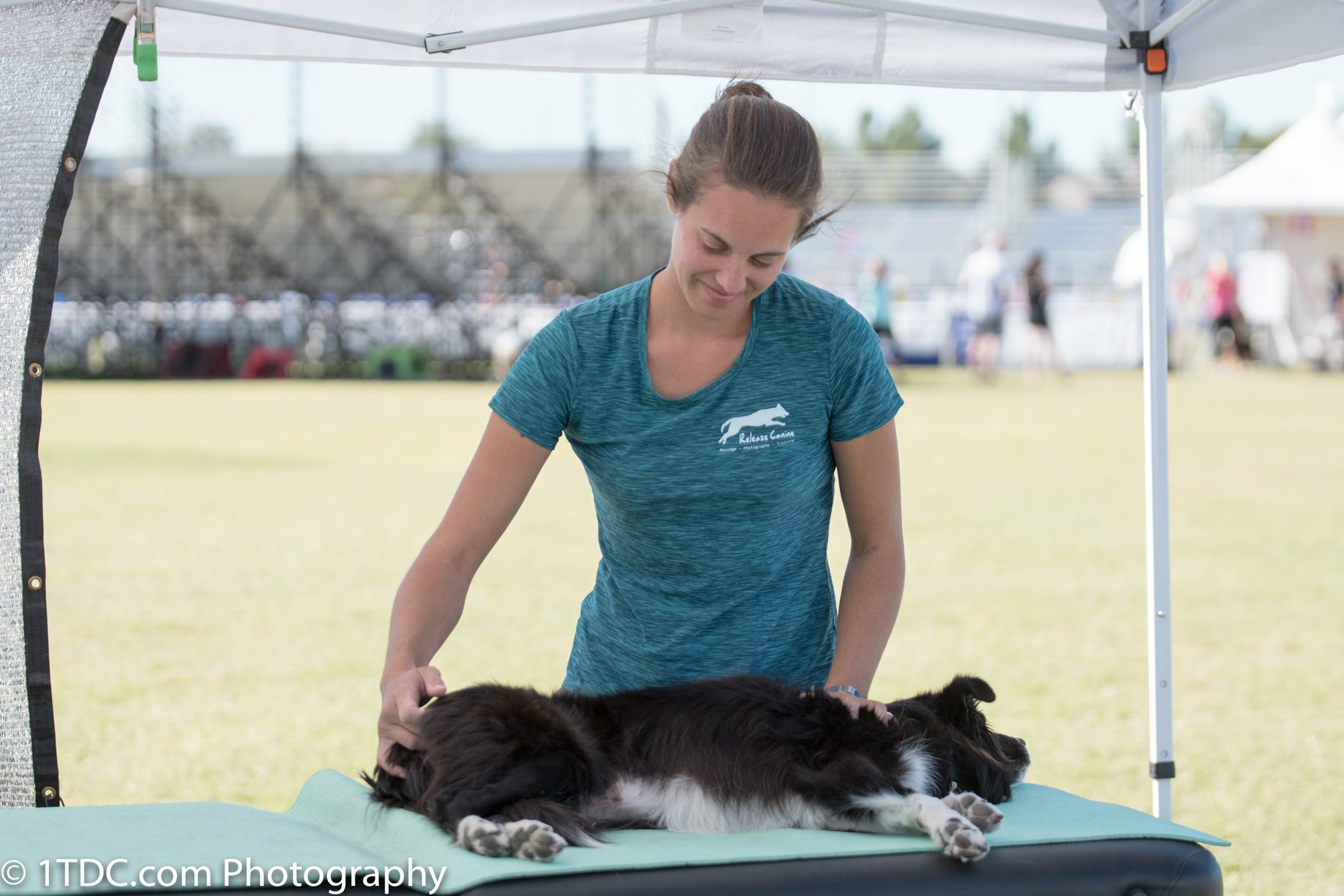 Instructor: Aleks Woodroffe
Aleks Woodroffe (Bsc, CTMT, ACMT) is a Canine Bodyworker and Scent Work trainer in Phoenix, AZ...


