Is there tension in your home? Do you dream of peaceful coexistence instead of grumbling, growling, snapping, or full‑blown conflict between the individuals who live together?
Whether you’re dealing with a dog who becomes frustrated and over‑aroused, escalating into a crescendo of undesirable behavior, or multiple dogs whose interactions create friction and conflict, this class is designed to help restore balance and calm.
We begin by identifying the emotional and motivational drivers behind your dog’s behavior. Some dogs are genetically or historically “pushy” and easily over‑aroused; others experience big emotions that lead to defensiveness or reactivity toward people or other animals in the household. Understanding these factors allows us to create a targeted training and behavior‑modification plan that supports your dog’s wellbeing and improves household harmony.
You’ll learn how to set up the environment to prevent rehearsal of problem behaviors, establish clear expectations, improve communication, and create predictability and structure—key elements that reduce anxiety and promote calmer behavior in common areas of conflict. We’ll incorporate desensitization and counterconditioning when needed, along with trained alternative and incompatible behaviors, to help your dog(s) develop more positive associations and smoother interactions with the individuals they live with.
Please note: Extreme cases of aggression resulting in serious injury are not appropriate for this class.
Gold students will receive a customized management, training, and behavior‑modification plan tailored to their household. We’ll establish realistic expectations and work through conflicts—whether dog‑to‑dog or dog‑to‑human—to help you create a more peaceful, cooperative living environment. If you’re unsure whether this course is suitable for your situation, please reach out to the instructor via email.
Teaching Approach
The Teaching Approach in this class will include multiple lectures each week that will include written descriptions along with videos.There will be material presented that will not apply to everyone and therefore I may instruct a Gold Student to ignore that lecture. It will all depend on the situation and what it warrants to manage and modify if. Due to the nature of the class, there may be additional recommendations added to the curriculum to accommodate the needs of the participants.
Karen Deeds is a Certified Dog Behavior Consultant through the International Association of Animal Behavior Consultants (IAABC). She is the co-owner of Canine Connection with her husband Bob Deeds, a retired Federal K9 Handler from Texas Task Force I. In 2023....(Click here for full bio and to view Karen's upcoming courses)
Week two – Lecture 2 - Alternative Behaviors Introduction
In this lecture, we will begin the creation of trained skills that we can use as alternative or incompatible behaviors for use in our behavior modification plan.
When we train skills with positive reinforcement, that behavior carries with it the conditioned emotional response created with the cued behavior. These skills require the dog to ‘think’ which engages the pre-frontal cortex part of the brain which is opposite the limbic system where the emotional state of arousal is triggered from. The more behaviors we teach with R+ the more thoughtful and the less emotional and aroused the dog will be. We can use these skills to ask the dog to do something ‘good’ to prevent or interrupt the behaviors we don’t want.
Hand Target
There are several different ways to teach this skill. Choose what works best based on your dog’s learning style, previous history and your training preference.
Some dogs find touching the palm of your hand aversive, so using the front of your hand or even just a few fingers less threatening. You can start with a lure where you hold the food in your hand until the dog touches it, then mark and release the food.
Feed in hand
From there, you can transition to food not in your target hand, but to continue feeding at the target hand.
Feed at Source
For a dog that might be too mouthy touching your hand, or is only touching your hand because they are thinking there is food there, you can work through the process with a target stick or other inanimate object.
Chin Rest
This is a behavior that we can use in a variety of contexts. Because it is a calming behavior (duration), it can be used to reduce arousal as well as part of a start button process.
Feeding at Source:
Eye Contact
Having a dog that looks to you as a default behavior, or even on cue is a way to interrupt inappropriate behavior and to gain your dogs attention so you can ask for another behavior. It can also help you gauge the dogs emotional state.
You can use a kissy noise to get the behavior, or simply capture it when they offer it. Add in a high rate of reinforcement if necessary;
Using Marker Cues to create a loop for Eye Contact
Sit
Just like with eye contact, a dog that is in the right frame of mind and can ‘offer’ a sit. Having this skill in your toolbox as an alternative or even an incompatible behavior is helpful. You can certainly use luring to get the behavior or capture it. Add in multiple markers to help with fluency and generalization
Settle
This skill is probably one of the most valuable ones when working with dog/other pet conflicts, impulse control around guests, or a myriad of other situations.
The primary goal of this exercise is to facilitate your dog learning to be calmer, less reactive, or even just less annoying! Whether they remain on leash or off leash depends on your problems and goals. The level of disengagement from you is, again, up to you and your goals. If you have previously trained a “go to” mat using a clicker and shaped or even lured the dog to get on the mat, marked it (clicker) and then tossed a treat off the mat or let the dog get off the mat to get the reinforcement, then you may want to choose a different mat or context in which to train this behavior. We do NOT want this to be an ‘active’ behavior or to start off as an ‘operant’ behavior! That will put them into the wrong emotional/arousal state.
Conditioning the Mat
We can provide a variety of cues for your dog to ‘settle’, based on your goals and usage. In one situation the mat itself may be the cue, (in the crate, in the car, at the vet) another cue may be that you are disengaged from the dog and relaxed, (at your computer, lounging on the sofa) you may want to ‘park’ your dog on leash, (out for a walk and you meet someone you want to talk to, at class waiting your turn) or you may need to be able to cue it verbally or with a hand gesture (when working on reactivity or around distractions). There may be a bit of a divergence as the process continues depending on your goals. But it all starts the same.
Remove your dog from the room and place your mat close to a chair or couch where you will be sitting. Scatter about 10 – 15 yummy treats on the mat. You can also use their daily kibble for this process of your dog is a good eater!
Seed the mat -
Put your dog on the leash and bring it into the room to the mat. As your dog discovers the treats, sit down. Keep the dog on leash by holding it or attaching it to the foot of the chair/couch. You can have a bait bag of back up food but hold a handful in your hand. Drop a few more treats on the mat as your dog continues to sniff and look for them on the mat. Continue to drop one treat every one or two seconds around the front paws on the mat. It is important to drop the treats on the mat and not give them directly to the dog. We want the dog to associate the food with the mat with focus down, not on you. Do this for a few minutes, then release the dog with your release word (“All done”, “Free dog”, “Ok”) and stand up and remove the dog from the area.
Bring your dog to the mat -
Different dog -
Repeat this process; seed the mat, bring the dog on a leash towards it, sit in the chair, and continue to drop treats on the mat. Once the dog recognizes the mat as a good place to be and moves to it readily when you approach it, begin to move it to different locations within the house. This is called generalization. It is important that your dog be able to learn to ‘settle’ in a variety of places at the beginning of the process as it will help as we progress.
Dog moves to mat easily -
If the dog lifts its head to nuzzle your hand for treats or looks at you for attention, you MUST ignore it. Look at the mat and don’t make direct eye contact. Get the dog to the point that they recognize the mat as a good place to be and you can put it into several different locations in the house and they will go to it willingly looking for food. Remember to generalize it with and without food on the mat.
Name Game (Name Modifier Cue)
We want to first teach each dog separately that when you say their name, that they are going to get the reinforcement. Reinforcement can be food or petting, depending on what your dog finds most valuable.
Start with each dog individually. Say their name and deliver the food or give them a pet. Make sure that you say the name BEFORE you give the reward. Their name will become a cue to look your direction or turn away from something (the other dog perhaps) to get a treat.
A sampling of what prior students have said about this course ...
This was a very interesting class that introduced me to a wide variety of bmod skills that I hadn't seen before. The lectures felt like a crash course in every modern bmod skill out there! Karen was great at helping narrow down what techniques would be relevant for us to work. Even though our household isn't harmonious (yet), I feel like I have a good selection of skills and tools to keep working towards integration.
The class was paced well and was absolutely excellent!
I'm so glad I took this class. It's just what I needed to get me on track with my anxious impulsive BC. He and I are having a great time learning a lot of new fun alternative behaviors. I look forward to more classes from Karen.
Thank you, Karen, for offering such a wonderful, highly valuable class. You do so much to get to know the case, which really sets us up for success. Your experience is impressive, and your compassion for people with hard dogs is so needed. I appreciate how much I learned and wish my girl didn't need surgery towards the end of class. Fortunately, she doesn't have cancer, so we will be back.
A massive amount of wonderful information was provided. Karen's descriptions in the lectures made it easy to figure out what was relevant to our situation and what wasn't.
Registration
Next session starts: October 1, 2026Registration starts: September 22, 2026Registration ends: October 15, 2026
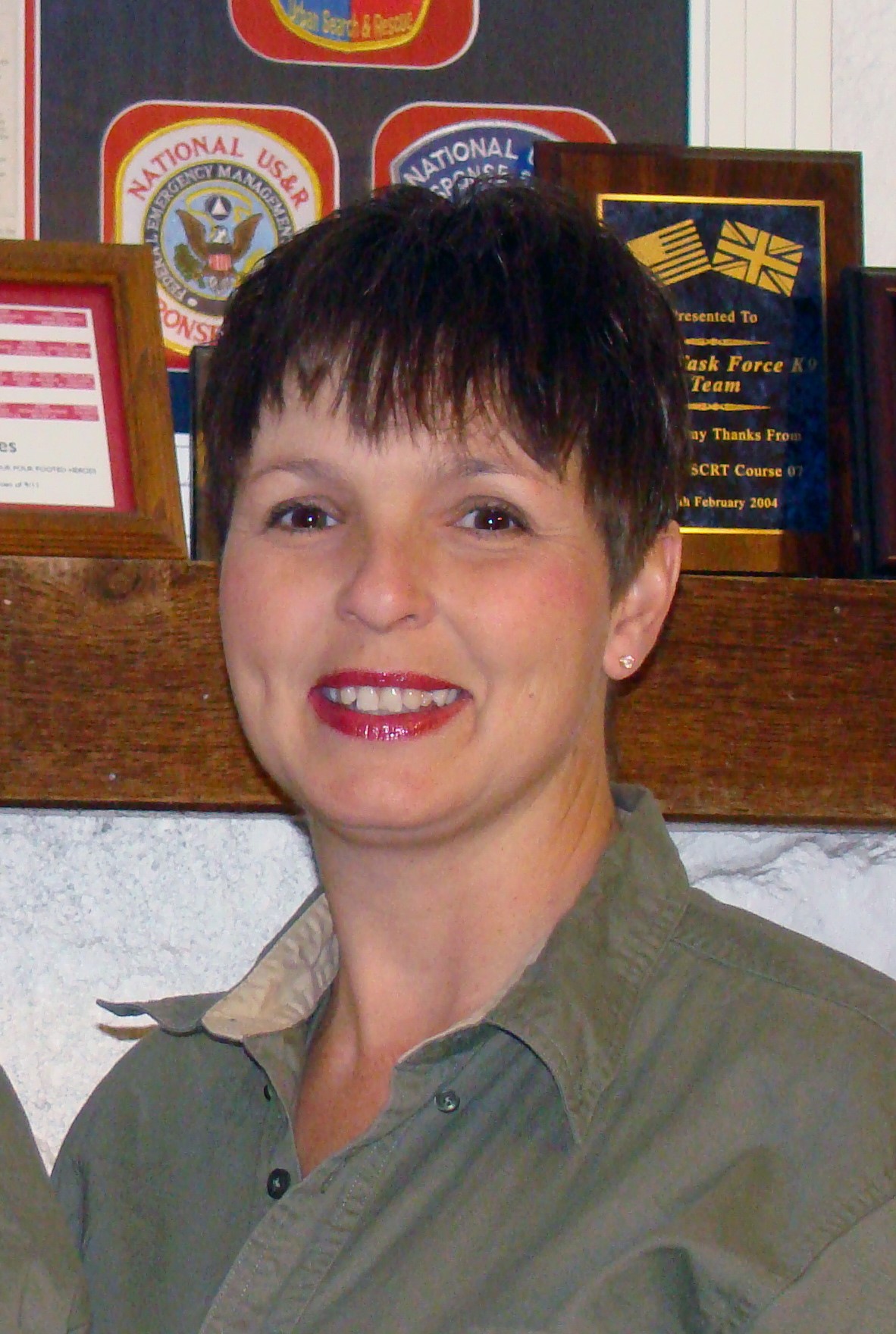 Instructor: Karen Deeds, CDBC


