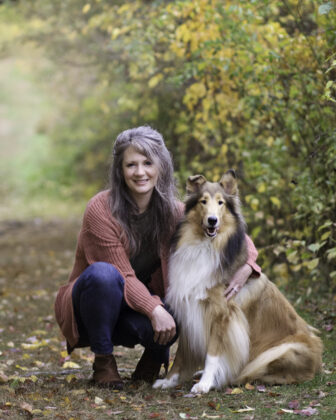
Calling all BIG feelings dogs! Whether your dog demonstrates his feelings loudly and with big actions, or quietly and suppressed, this class is for you. We’re going to take a deep dive into the Control Unleashed skills that work best for our big feelings dogs. In addition to addressing general calming techniques and patterns and take a look at lifestyle and environment, we will also tackle the complex CU skill of Look At That (LAT).
When taught carefully and thoughtfully, LAT can become the game changer that turns triggers into opportunities for quite communication. We’ll also use the Animal Centred Education (ACE) framework called Free Work to address your dog’s emotions and physical structure in a way that lowers arousal, builds healthy patterns, and shapes physical and cognitive comfort, without the need of access to triggers or training. This class will change the way your dog feels from the bottom up, providing a healthier and happier dog for whatever their lifestyle requires.
Teaching Approach:
Kim releases lectures every few days based on the classroom progress. Skill-based lectures will include written text, a tutorial video, step-by-step instructions, and occasionally additional demonstration videos. Concept lectures will be mostly written text with occasional demonstration videos. Because this is a new class, bonus lectures or discussions may be added in addition to what’s listed on the syllabus.
Feedback is unique to each individual student and their needs. The feedback is written and may include timestamps or screenshots to point out specific points in the video (especially for Free Work exercises.) Focus is placed not just on the skill itself, but also the handler’s mechanics and the dog’s physical and emotional comfort level to ensure the most progress can be made. Recommended next steps are often included.
Kim will also offer a few Zoom sessions throughout the class (open to ALL students) to lecure on specific skills and answer questions about classroom content.
This class will have a Certified Control Unleashed Instructor, Nicole DuFresne, as the primary TA for the bronze and silver levels for part of the class.
Kim Palermo CPDT-KA (she/her) is a Certified Control Unleashed Instructor and ACE (Animal Centred Education) Practitioner. She specializes in teaching Control Unleashed and ACE Free Work with private clients, teaches a high volume of in-person CU classes, and incorporates CU into all of her membership-style group pet dog classes for her dog training business, BlueDog, located north of Boston...(Click here for full instructor bio)
Because this is a brand new class, this schedule is flexible and may change as I continue to update lectures based on students' progress.
Week 1 LAT Lecture: Truly Understanding the Look At That Game (LAT) LAT Skill: Looking at a Neutral Object in Your Hand Lecture: What I Mean by Thresholds Relaxation Lecture: A Portable Relaxation Skill Relaxation Skill: Attraction to the Mat Pattern Lecture: The Benefit of Patterns
Week 2 Free Work Lecture: An Introduction to Free Work LAT Skill: Looking at a Neutral Object Placed Down Relaxation Skill: Building the Picture of Relaxation Pattern Lecture: Management Versus Counter Conditioning - Which One to Choose Pattern Skill: The Up Down Game Free Work Lecture: Considering Structure and Comfort for Your Big Feelings Dog
Week 3 Free Work Skill: Determining the Best Free Work Stations for Your Dog LAT Lecture: Looking Versus Indicating LAT Lecture: A Command, a Cue, or a Question - It’s All About the Conversation LAT Skill: Adding Your LAT Verbal Cue Relaxation Skill: Take A Breath Pattern Skill: Whiplash Turn
Week 4 Start Button Lecture: What is a Start Button and Why Do We Use One Free Work Skill: Setting Up a Free Work Session LAT Skill: The LAT Sequence - Setups Relaxation Skill: Building Duration with Down for the Count Pattern Skill: Give Me A Break Start Button Skill: Building a Dog’s Choice Start Button
Week 5 LATTE Skill: Setting Up a LATTE Session (Look At That, Then Enrichment) LAT Skill: The LAT Sequence - In the Real World Pattern Skill: Super Bowls LATTE Lecture: Why LATTE Takes LAT to a Whole New Level Start Button Skill: Voluntary Sharing - Working Through Resource Guarding
Week 6 LAT Lecture: When and How to Introduce LAT into the Real World Start Button Skill: Requested Approach Training - Helping with Stranger Danger Bonus Pattern Skill: The Chair Game
Prerequisites and Equipment
Recommended equipment can include some or all of these:
Look At That: Looking at a Neutral Object In Your Hand
“Excellent communication doesn’t just happen naturally. It is a product of process, skill, climate, relationship and hard work.” – Pat McMillan, author, CEO
There are two primary mistakes that I often see people making when teaching their dog The Look At That Game that leads to no change or even worsening of the behavior. Skipping this step of teaching our dog to look at a neutral object is one of them. The other is taking the game into the real world too quickly, which in fact most often goes in line with skipping or rushing through this step.
That said, we are starting our class with this skill and will be nearly perfecting it before progressing to the next steps of LAT! Not only will it bring you that much closer to helping your big feelings dog, but it will also help you become a better trainer. Teaching our dogs to look at a neutral object requires precision, good mechanics, creativity, and skillful progression. Whether or not some of these come easy to you, by the end of these 6 weeks you will be thrilled by your development as a trainer!
So why are we putting so much effort into teaching our dog to look at a neutral object?
I want the action of looking at something, without any feelings attached, to become a heavily reinforced behavior for my dog. That way, when I begin to work on the actual counterconditioning part of LAT, looking at something is a skill that is in my dog’s toolbox that they will eagerly offer.
What is a Neutral Object (NO)?
Anything that your dog doesn’t find remarkably interesting or concerning! Normal household items that may be seen by your dog throughout the day are best. You will be holding this NO in your hand, too, so make sure it’s large enough for your dog to decipher it from your hand itself. For example, a large mixing spoon would work better than a writing pen.
How will we get our dog to look at the NO? Especially if our dog has been highly reinforced for eye contact or has learned Zen Hand?
We are going to use a motion lure to capture our dog’s attention, and then stellar marker timing to seize the opportunity. For some dog and handler teams, this will be easy. For others, we might have to troubleshoot. But not to worry, I have every trick imaginable up my sleeve!
The Look At That Game: Neutral Object Setup
Ideally, we want a stationary dog. Throughout this class we will be building a relaxed position as we progress LAT. Until then, use whatever skill might work best to anchor your dog, whether it’s a cued position or some kind of a platform or mat. And if your dog doesn’t have any solid stationary behaviors right now, not to worry! Your dog will be in front of you. Your NO will be in one hand. You will be feeding your treats from the opposite hand. This will form a triangle for your dog to turn their head to look at the NO in one direction, then turn their head to eat in the opposite (thus building our “look.)
I highly encourage you to use a clicker for this skill simply because the timing of the marker is so important here. If you have a well timed mouth click, that could be a good alternative. I prefer to hold the clicker in my treat hand so that it doesn’t interfere with how I hold the NO, and practicing the skill of picking up treats with a clicker in your hand is very useful! Here’s an example of that:
Alright, we’ve got out NO, we’ve got our setup, and we’ve got our marker system in place! Now it’s time to train!
LAT Neutral Object Step 1: Motion Lure Steps
1. Begin with your dog in front of you and your NO behind your back. 2. vBring the NO out to your side at about arm’s length and shoulder height. You want to move the object relatively quickly to attract your dog’s attention. 3. The moment your dog looks at the object, click. 4. Feed your dog with the opposite hand while returning the object back behind your back. 5. Repeat this a few times on one side. 6. Switch hands now so that your dog must look to the opposite side.
You’ll then want to generalize the object that you’re using, the location where you’re playing the game, which side you’re holding the object on, and your dog’s position. Keep sessions very short, 3-5 repetitions each, and progress to the next step relatively quickly so that your dog doesn't become reliant on the motion lure.
LAT Neutral Object Step 2: Fading the Motion Lure Steps
1. Bring the NO out to your side. 2. The moment your dog looks at the object, click. 3. Feed your dog and keep the object out by your side. 4. When your dog looks at the object, click. 5. Repeat.
Sometimes it works better to sneak one or two reps of Step 2 into a session of Step 1. That way your dog is in a rhythm and more likely to look at the NO, but you can get a few reps under your belt without the motion lure!
A few additional tips.
1. Clicking/marking early is always going to be better than clicking late because you’re reinforcing your dog for moving their head toward the object rather than back to you. 2. And along those lines, if you miss clicking for the look, just feed a treat without the marker! You’re better off simply rewarding, than clicking late because you realized you missed the look. 3. If your dog thinks that the game is about giving you eye contact, try to avert your eyes by looking in the direction of the NO (while still being able to watch your dog.) 4. Try to avoid the natural tendency to try to get your dog’s attention by waving the NO if they’re not looking. If that’s the case, toss a reset treat, go back to a few reps of Step 1, and then try getting in one rep of Step 2. 5. If your dog has targeting thoughts and is moving toward the NO to touch it, remind them to remain stationary with a cue or a prop, and emphasize feeding from the opposite hand to encourage stillness.
Alright, ready to try it?! Let’s get started! I love troubleshooting the first two steps of this game and am excited to help you progress through them with your dogs : ).
A sampling of what prior students have said about this course ...
I loved this course. I was searching for a way to help my reactive dog. He loves walks but he reacts to almost everything that moves. At times it is impossible to take him on walks because of the number of triggers. This class is giving me hope that with some hard work on the skills taught in this course that Carter will be able to go on long enjoyable walks. Kim was an excellent instructor. Her lectures were clear and easy to understand and combined with her great TA and the Zoom sessions made it a great learning experience. I look forward to Kim’s upcoming classes.
Excellent presentation! I loved all the specific videos plus the written explanations and instructions. Very, very helpful!!
I have been completely converted to CU pattern games. Wish I had known about them when my four year-old was a puppy. Thank you. I want more!
I came into this course somewhat familiar with Control Unleashed concepts and had even used some CU games with my dogs. However, this course completely changed my understanding of how to train and use these concepts. Kim does an amazing job of explaining the "why" behind CU, not just the "how". I have a whole new appreciation for my Big Feelings boy and new tools for helping him communicate and self-regulate. Training sessions that once quickly spiraled into a mess of frustrated barking are turning into a two-way conversation where we are learning together. It isn't magic - it is hard work - but it sometimes still feels like a miracle! Throughout the course, Kim's insightful and supportive feedback really enhanced the experience.
I loved this class so much! I can’t wait for the next one! Thank you for your clear explanations and ways to break down these skills to help our big feelings dogs!
Kim is such a very professional and very kind instructor, always looking for good things to say about our way of handling our dogs, and points out with her sharp and detail oriented eyes, points where we could get better. She’s very good at reading our dogs, and differentiate the teaching, so it fits to each of the teams. This course has seriously made such a significant difference for me and my dog, and given me so much hope for a further positive development. The opt out station is the best we could learn, and I see my dog starting to choose me and the games, we make, and asking me to do Free Work! That’s big. So big thank you from us. Elly and Christina
Kim is a wonderful instructor and has made the content incredibly clear and engaging. Her eye for small details on the golds has been enlightening - helping me spot tiny signals of discomfort, pain, feelings creeping in that might undermine a session. This course has helped me give more agency to my dog to make choices about our training as well as provided opportunities for us both to build the foundations for us to tackle our big feelings together. I look forward to taking Kim's next class!
Registration
Next session starts: April 1, 2026Registration starts: March 22, 2026Registration ends: April 15, 2026