BH415: Do THIS, Not THAT! A Practical Approach to Better Dog Behavior
Course Details
If you’ve ever wondered, “What should my dog do instead?” this class is for you. We’ll teach you how to replace frustrating habits with behaviors you want using reward‑based training grounded in solid behavioral science. We will not be addressing dog to dog or dog to human aggressive behaviors.
Differential Reinforcement (DR) is a simple, effective method based on operant conditioning: behaviors that when reinforced become stronger. By rewarding the good stuff, you naturally reduce the not‑so‑good stuff. We’ll also look at what triggers your dog’s unwanted behavior and how their emotional state affects learning. Replacing the unwanted behavior without addressing the emotional state can often backfire.
For DR to work well, your dog needs to practice new behaviors when they’re calm enough to succeed. These replacement behaviors should be quick, reliable, and feel good for your dog to perform. A sit taught with treats and praise, for example, creates a much more positive emotional response than a sit taught to avoid correction.
You’ll learn three DR strategies:
DRI (Incompatible Behavior): Teach a behavior your dog can’t do at the same time as the unwanted one. This is the most difficult to accomplish because it requires you teach a behavior that cannot occur at the same time as the undesirable behavior and that you understand the function of the behavior to be replaced so you can provide a more appropriate outlet for it.
DRA (Alternative Behavior): Reinforce a more appropriate, good option. This is the most common DR procedure applied. You will teach your dog a more appropriate behavior that serves a similar or same function as the undesired behavior.
DRO (Other Behavior): Reward your dog for doing anything other than the problem behavior. This process is the easiest because it may not entail teaching anything new but just rewarding better choices.
By the end of this class, you’ll know how to use these techniques to build better habits, reduce unwanted behaviors, and help your dog feel confident and successful through clear communication and positive reinforcement.
Teaching Approach:
Since this is a problem solving class, there will be a lot of information gathering from each student at the beginning, as well as discussion about the differential reinforcement procedures that are utilized in the class. There will be foundation skills and concepts presented in the first few weeks, then the class will turn into more a 'handlers choice' as each student will get a customized training plan for the specific problem(s) they are wanting to work on.
Karen releases lectures every few days based on the classroom progress. Skill-based lectures will include written text, as well as detailed video demonstrations when appropriate. Concept lectures will be written text with demonstration videos and occasionally a narrated video of that concept. Because this is a new class, the syllabus may be modified.
There are general concepts and skills that are often foundations for training desired behaviors that can be part of a differential reinforcement process. These foundation skills and concepts are found within the first two weeks.
After that, the course will take a customized approach for students to create a specific behavior modification plan for the problem behavior(s) they are wanting to address. Feedback is unique to each individual student and their needs. The feedback is written and may include detailed analysis of your video as well as example videos as part of your feedback.
Timing, mechanics, food placement, and reinforcement type will all be part of the feedback for the students.
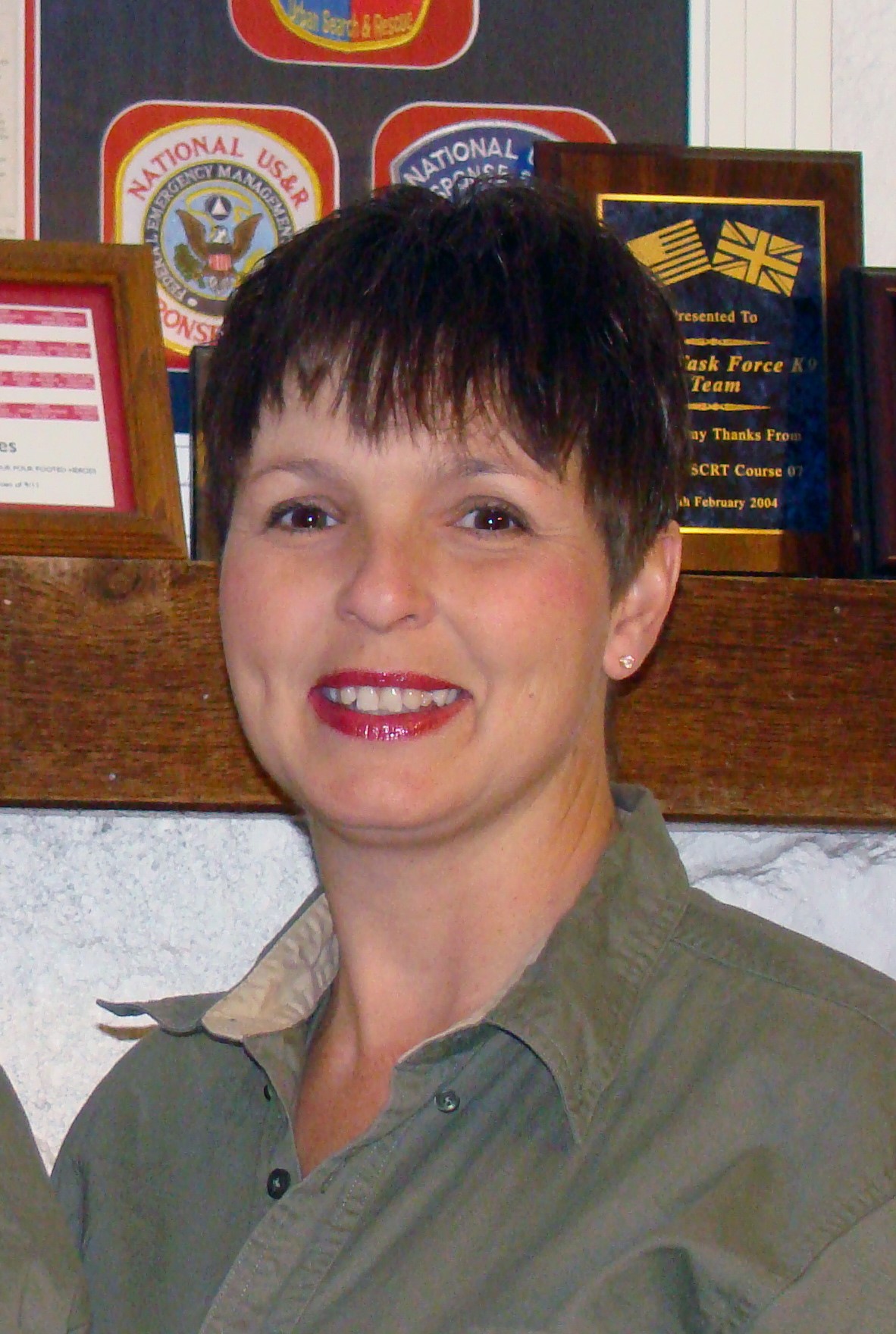
Karen Deeds, is a Certified Dog Behavior Consultant through the International Association of Animal Behavior Consultants (IAABC). She is the co-owner of Canine Connection in Ft. Worth, TX with her husband, Bob Deeds, a retired Federal K9 Handler on Texas Task Force I....(Click here for full bio and to view Karen's upcoming courses)
Emotional regulation determines whether a dog can think, learn, and adapt.
When we use differential reinforcement in training and behavior modification, we must consider both the dog’s emotional state and their level of arousal. Replacement behaviors need to be taught under threshold and then applied to real‑life situations through desensitization and counterconditioning. This ensures the dog’s internal state supports the behavior we’re asking for.
When arousal spikes—whether from fear, frustration, excitement, or anxiety—the dog’s brain shifts into survival mode. Impulse control drops, food often loses value, attention narrows, and behavior becomes reflexive rather than thoughtful.
Up to this point, we’ve focused on ensuring dogs receive appropriate mental and physical stimulation and on developing reinforcement strategies that not only teach desired behaviors but also help regulate arousal. Additional elements will be layered in later to further support this process.
A regulated dog is more resilient, recovers more easily from being startled, and learns and adapts more readily. Behaviors taught in this state become stronger, more reliable, and more durable in real‑world conditions.
Environmental Management
We need to be able to identify the specific who, what, when, and where the undesired behavior occurs as described in the beginning of week one. For now, we need to avoid, as much as possible, these situations. Or we will find a way to work around them or manage them until we are able to make emotional and behavior changes.
Simple barriers can work wonders. Baby gates, leashes, visual barriers, etc
Transport
One common management technique to get your dog from point A to point B is a ‘transfer or ‘cookie magnet’.
You can use food:
Or you can use a toy:
Food Placement
Another management procedure for a variety of situations might be just to deliver food on the ground to prevent jumping or dropping food as you move, which is something I call Hansel and Gretel. Of course, these procedures can also work to change behavior!
Entering door:
Moving:
Manipulating Arousal
Now that we understand how emotional regulation affects learning, we can start using what we already know to influence a dog’s arousal in real time. Remember: food, toys, and Premack don’t just reinforce behaviors—they also shift the dog’s nervous system.
How Eating Changes the Nervous System
Eating activates the parasympathetic nervous system, which supports calm, digestion, and recovery. Because we’ve built cues that tell the dog how to eat, we can use different eating patterns to influence arousal in specific ways:
• Licking lowers heart rate and promotes calm. • Slow, rhythmic feeding helps downshift arousal. • Predictable cues create clarity and safety, reducing uncertainty. • Sniffing for scattered treats activates the SEEKING system in the prefrontal cortex—the “thinking” part of the brain—which naturally competes with the limbic (emotional) system.
In other words, sniffing + eating can shift your dog out of an emotional state and back into a thinking state.
Types of Over‑Arousal
Dogs can show over‑arousal in two very different ways. Both states interfere with learning, and both require regulation before training can continue.
Over‑Arousal: Active
These dogs look “amped up,” but the energy is usually anxious, unfocused, and reactive. You may see: • frantic movement • jumping, spinning, or pacing • difficulty responding to cues • impulsive or explosive behavior
This isn’t “high drive”—it’s dysregulation. The dog isn’t thinking clearly.
Over‑Arousal: Passive
Other dogs go the opposite direction. Instead of exploding outward, they shut down inward. You may see:
• scanning the environment • slow, stiff movements • tension in the face or body • sniffing that looks disconnected rather than purposeful • withdrawal or “freeze” behavior
These dogs are just as dysregulated as the active ones—they simply express it differently. Their cognitive processing is equally compromised.
Marker Cue Loop
We can use the scatter of multiple treats on the ground to influence active over-arousal as well as the ‘slow cookie’ delivery. We can imitate prey drive by allowing the dog to chase a cookie or toy and that can help a more passive dog feel more energized or activated. What we want to find is that middle ground where our dog seems to be optimally aroused.
One of my favorite techniques is to create a hierarchy within the multiple marker cue system and use that to move them up or down.
Decreasing Arousal
A food scatter is one of the most effective ways to help a dog lower arousal. Sniffing for multiple treats activates the SEEKING system in the prefrontal cortex—the part of the brain associated with thinking, problem‑solving, and curiosity. As this system turns on, the dog naturally becomes calmer and more thoughtful.
Sometimes you’ll need to repeat the scatter several times before the dog can eat, stop scanning the environment, and offer eye contact. Once the dog can reliably eat and reconnect with you, you can increase difficulty by switching to a different marker cue and a different way of delivering food. When you get a clean loop—marker → eating → eye contact—twice in a row, you can move up to the next level.
A typical arousal‑lowering progression looks like this:
1. Multiple treats on the floor (scatter) 2. Food delivered from the hand (clicker, “yip,” “yes”) 3. A tossed treat to chase (“toss/search”) 4. A treat to catch (“catch”)
Repeat each step until you get two clean loops before increasing difficulty.
Increasing Arousal
For dogs who are shut down, frozen, or unable to eat from your hand or the ground, we may need to raise arousal slightly to get them moving again. Engaging a bit of prey drive—through a tossed or caught treat—can help jump‑start their system.
Once the dog begins to move, respond, and eat, you can work down the hierarchy and eventually end with a food scatter to settle them again. You may need to experiment to see which pattern your dog can respond to first.
In this video, you will see the beginning process of the Marker Cue loop at the door where the dog is worried about what is off to the left of the screen. I ‘scatter’ until I can create a ‘loop’ of eating to offer eye contact.
In the next video, you will see how I am able to increase the difficulty of offering eye contact in a distracting environment simply by changing the marker cue.
Marker Cue Loop to Regulate Arousal Around Vehicles
This video shows my Border Collie, who historically struggled to focus around vehicles due to a strong compulsion to chase them. Even though we’re about 100 yards from the road, he knows cars could appear, so he stays hyper‑vigilant.
1. Starting With “Scatter”
After giving him a moment to sniff, he offers a small check‑in. I mark that with “Scatter.”
Once he eats the scattered treats, he continues sniffing. I simply stand still and let him. Sniffing is calming and activates the SEEKING system in the prefrontal cortex, helping shift him into a more thoughtful state.
2. Watching for the First Reliable Check‑In
When he checks in again, I give another “Scatter.”
This time, he sniffs for a shorter period and stays closer to me. He offers eye contact more quickly—an early sign that arousal is dropping and cognition is returning.
3. Moving Up the Hierarchy: Clicker
Next, I switch to the clicker.
There’s still some latency between eating and offering eye contact, so I stay at this level until that delay shortens. The goal is two clean loops: marker → eating → eye contact.
4. Testing the Hardest Marker: Toss
Then I try the hardest marker cue for him: the toss.
Because it’s the most arousing, it’s also the hardest one for him to “come back” from. As expected, I lose him—he eats the tossed treat and immediately goes back to sniffing the environment.
5. Returning to the Easiest Cue to Re‑Stabilize
Since the toss was too difficult, I drop back to the easiest, highest‑paying cue: Scatter.
This gives him a “bonus” for re‑engaging with me and helps re‑establish the loop. I repeat scatter until latency is low again.
6. Climbing the Ladder Again
Once he’s stable, I move back up:
• Clicker → good recovery • Toss → he looks around a bit while eating, but quickly returns with eye contact This tells me he’s now regulated enough to handle the harder cue.
7. Adding a Behavior Cue
When he’s offering consistent eye contact—even after the most difficult marker—I can confidently add a behavior cue like “Sit.” Because he has shown me, through his check‑ins, that he feels safe and regulated, I can reasonably expect compliance without conflict.
In this video, I am in a new location with this dog, and I am ensuring that she gets a chance to look around and check out her environment before I ask for much. The first thing I ask for is to eat food… I start with ‘scatter’ because that gives her the biggest reinforcement as well as allowing her to sniff some. Notice after the 2nd click and treat, she checked out by looking into my neighbor’s yard where there was a kid playing… so I started all over with ‘scatter’ again to make it easier before proceeding onto the clicker, then the ‘toss’ then asking for actual behaviors.
With this particular dog, she was worried about some movement outside the window. I attempted to use ‘scatter’ to get her to connect with me, but she continued to struggle. I eventually used the ‘clicker’ (and feeding one treat from my hand) and he response improved. This dog had a higher reinforcement history of the clicker than scatter therefore it was more effective.
Toys We can also use toys to build regulation although they are often arousal increasing reinforcers. We can use them to teach our dog to go up and come back down. They teach impulse control through rules, and this in itself can help regulate arousal. The dog can learn to ‘toggle’ states and excitement become more functional. The dog can learn to go from a higher state of arousal to a lower which will help to practice recovery and to build resilience and flexibility in their emotions.
In this video you will see the use of toy play as reinforcement for various skills and also how they can be used to help with impulse control. We have explored putting toy play on cue earlier in the week!
There are no scheduled sessions for this class at this time. We update our schedule frequently, so please
subscribe to our mailing list for notifications.
Registration opens at 10:00am Pacific Time.
SILVER LEVEL Testing Project for April 2026 - In this session students will be permitted to submit ONE 90 second video per week when registered at the silver level. All "your dog" specific questions must be accompanied by video so the instructor can assess video and questions together. Silver students may also ask generic questions and participate in discussion forum threads.
 Instructor: Karen Deeds, CDBC