logo

  • Log In
  • Lectures
  • Homework Forum
  • Discussion Forum
  • About Us
  • Calendar
  • Faculty & Staff
  • instagram-icon
  • facebook-icon
  • twitter-icon
  • Courses
    • Schedule
    • By Discipline
    • By Instructor
    • Prerequisites
    • Self-Study
    • Scholarships
    • Gift Certificates
  • Webinars
    • Schedule
    • FAQ
  • Workshops
    • Schedule
    • FAQ
    • Gift Certificates
  • On Demand
    • Pet Dog Presentations
    • Pet Professionals Presentations
    • Self-Study Courses
  • Special Links
    • Podcast
    • Blog
    • Fenzi TEAM Titles
    • Trainer Certificates
    • Private Lessons
    • Other Free Stuff!
    • Swag
  • Conferences
    • CANIS Conference Registration - Attend In-Person
    • CANIS Conference Registration - Virtual Attendance
  • Contact
    • Course FAQ
    • Webinar FAQ
    • Workshop FAQ
    • Testimonials
    • Contact Help
  • Courses
    • Schedule
    • By Discipline
    • By Instructor
    • Prerequisites
    • Self-Study
    • Scholarships
    • Gift Certificates
  • Webinars
    • Schedule
    • FAQ
  • Workshops
    • Schedule
    • FAQ
    • Gift Certificates
  • On Demand
    • Pet Dog Presentations
    • Pet Professionals Presentations
    • Self-Study Courses
  • Special Links
    • Podcast
    • Blog
    • Fenzi TEAM Titles
    • Trainer Certificates
    • Private Lessons
    • Other Free Stuff!
    • Swag
  • Conferences
    • CANIS Conference Registration - Attend In-Person
    • CANIS Conference Registration - Virtual Attendance
  • Contact
    • Course FAQ
    • Webinar FAQ
    • Workshop FAQ
    • Testimonials
    • Contact Help

BH400: The Social Approach

Course Details

Welcome to the The Social Approach! I’m so happy to introduce you to the project I've been been working on for more than a year now with Josefin Linderström of Canine Consilience! She and I have been exploring blending the magic behind Play Way with the amazing way she trains, developed from Swedish low-arousal approaches to behavior change, and her experiences working with children in the school system. We wanted to bring a sample of these new ideas to the FDSA community first, and we really hope you love them!


Dogs are inherently social, and your dog is no exception. Just like humans, dog are a social species, and in many ways we were made for each other! Indeed, social connection is a biological need, and meeting this need is our responsibility, as important as food and shelter.

Unmet social needs are the source of more of your training and behavior issues than you may realize, and this isn't solved by doing more: more toys, more training, or more enrichment. What's often missing is the social element. Attunement and social responsiveness can make all the difference. 

Or, more simply put: being social changes everything.

In this class you will learn just how much you matter. Your own physical movements and social signaling affect almost everything you do with your dog, from training and performance, to hiking, walking, and everyday living together.

Social signaling is the way your body language talks to your dog. When your body misaligns with your intentions, your dog can get confused and frustrated, and your dog's way of trying to tell you can be easily misinterpreted. Let's get on the same page!

This class is a sampler of some of the concepts belonging to The Social Approach, a new system developed by Josefin Linderström and Amy Cook, PhD, who will introduce you to elements aimed at relieving common conflicts that arise between you and your dog, smoothing out communication.

We will show you our essential concepts, each of which will teach you how to listen and respond with social competence, and give you practical skills that meet their social needs meaningfully. And you will have fun doing it!

In this class, you will learn:

  • how space bubbles affect almost every interaction you have with your dog
  • how to say with your body what you're saying with your words
  • how to "listen in dog," and know what to say back
  • how to rely your dog's strengths, and see them in a new light
  • how to tell a joke your dog will laugh at!

Come explore The Social Approach with us!

Teaching Approach:


 Tana Aleks USS hornet 2024 Instructor: Amy Cook PhD

 Tana Aleks USS hornet 2024 Guest Instructor: Josefin Linderström

Syllabus

View Full Syllabus

This is the breakdown of the class, where each week we'll explore a concept from The Social Approach so you can get a feel for it. Each of these weeks is a lot bigger in the full system, but this will give you a chance to see what we want to emphasize in your training! You'll get to try out each and see what your dog likes, and how you can bring sociality to any aspect of what you train.

Week 1: Playing pretend - Jokes and dares

The games this week will teach you how to spark curiosity in your dog, and how to communicate that your dog is invited to play! We'll explore what it means to say that you're kidding, so that you can say both "I'm trying to get away" and "come get me, don't let me get away!" in the same act, which is the nature of a joke!

The Meerkat - Meerkats say "peek-a-boo!" and disappear, and dogs love it!
The Thief - Thieves try to get away with things, but oh no, they get caught!
The Spider - The spider sure hopes he doesn't get seen or chased, and will run away if scared!

Lecture: Pragmatics, or the art of conversation
Lecture: What is The Social Approach?


Week 2: Roundabout - A circular conversation

This week we stand in an ex-pen with our dog on the outside, and we play movement games! This arrangement can open up a ton of options for playing with toys, food, and most of all, you!  Movement is a dog's natural language, and this week will reveal a lot about what you do together.

Introduction to circles - let's learn what body language causes movement
Hurry up - in which you load the spring and build enthusiasm
Finding flow - putting this in conversation, and making a full game
Expansion pack - little jokes to tell 

Lecture: Proxemics, or the collaborative use of social space


Week 3: Dots and noodles - walking conversations

Dots are the places that call your dog on your walking adventures, and we want you to join them in their interests! You can get there together, and see your walks a whole new way.  Do you know where the dots are on your walks?

The noodle is your leash, and your leash doesn't stop at your hand! If your dog pulls, even occasionally, having a quiet social conversation about it can reduce the conflict that comes up.  This week you'll learn how to relax your arm, and talk "feet to feet" with your pullers. 

Dot games: Walking together, finding treasure at the end

-Dot to dot
-Dot dot forgot
-Dot dot neener
-Dot dot where?

Noodles: Walking together in a subtle exchange
-Train your eye
-What is a noodle arm?
-Talking feet to feet 

Lecture: Meet the need


Week 4: Bubbles and bands - using your movement to push and pull

Space bubbles and rubber bands are the theme this week, and that means really understanding the space between you and how it intersects. What happens when the bubbles bump? If you want to be close to your dog, or to invite your dog to be close to you, knowing their natural language and what your own behavior causes will be key. Let's make sure your words and your body say the same thing! 

Train your eye - can you see dogs doing this?
Gas and brakes - want more gas? Pull! Want more brakes? Bubble!
Wet dog - you don't want them, but you get them anyway. Bands!
Keepaway - pulling and pushing with flow and speed makes the game work

Lecture: Movement synchrony


Week 5: Search party: the hero

Your walks can fulfill your dog's exploration needs if she gets to direct you to where the dots are, and you can lean into that and place some for her enjoyment! This week we explore different ways of doing that, and we'll discuss the social elements that allow you to share in their world.

The rescue - "I remember where it is!"
The discovery - "Omg, what's this doing here?"
The side quest - "I searched and found it!"

Lecture: What dogs should be like


Week 6: Are you in conversation?

We'll wrap up our journey into The Social Approach with games that connect you and let you appreciate the language you've built together. 

Finding each other - Can you put together the elements and tell this new joke?
Grocery surprise - Sharing the spoils of your great grocery hunt, and seeing if there might be a special surprise!
Vigilance for lizards - Joint attention and hunting together, with a new sensitivity

Lecture: Why you want a naughty dog


Teaching Approach

This class has two instructors and you will get the benefit of our combined expertise throughout the class. We (Amy and Josefin) have developed this system together, and are collaborating in teaching it to you throughout the term.  We may vary who types the answer to you, but you can rest assured that the answers you get are from the both of us.  You may ask us specific questions about technique and timing, but we do hope you'll want to engage with the underlying concepts as well and will welcome discussion around the foundation of this approach.

We will release lectures throughout the week, and there will be assignments with video support for you to follow. Some of those videos have a voiceover, but they also have captions.  The videos get you started, and we fine tune in the gold threads. Each week will also have lectures without assignments, for us to expand on certain concepts we want to highlight. 

Our feedback to the golds will be detailed and supportive, and broad enough for others to learn from, thus we highly encourage that to get the best from the class that you make time to read at least the feedback on all the gold threads. We have both indoor and outdoor exercises, some leash walking and long line walkng if possible.  There will be food used mainly, though toys are welcome and can be included in most instances. Some of the exercises are done on the floor or bed, but for most you will be standing and moving and going on walks.

This class does not have a TA as this is the first time it is offered!

Prerequisites and Equipment

This class is suitable for all dogs with humans that want to work on being in social alignment We do use food and toys, and it's ok if your dog has a preference for one over the other. This is not a class that is for the resolution of fear or reactivity.

Some of the games take you outside on walks in your neighborhood, or out in parks or open spaces if you have them. It's good to have some room to set up expens that your dog can run around as well, though it might be possible indoors if you have enough space and a smaller dog.  If you have a way to be off leash or on a long line you'll be able to do bigger versions of some of the games, but we'll work with you with the resources you have and modify anything we can. Week 3 is about walking outside though, so if you are indoors only, just be aware of that. 

You'll need 1-2 expens (metal, midwest brand is fine, or anything similar) that can be made into a circle you can stand in, the food and/or toys that your dog likes, and your sense of humor!

Sample Lecture

More

Dog training has come a long way in the past few decades. With kind methods, we can train dogs to an unprecedented level of precision. By setting up for success, splitting criteria, and using well-timed, intentionally placed rewards, we’ve turned the act of telling dogs what to do into a science. The evolution of dog training has made us clear, confident speakers. 

So, what about being a great listener? 

How we feel about communicating and engaging, depends on how well the other person listens. We all know what it’s like to talk to someone who’s not really listening, just waiting for their turn to speak. Bad listeners shut us down, and the same is true for dogs.  

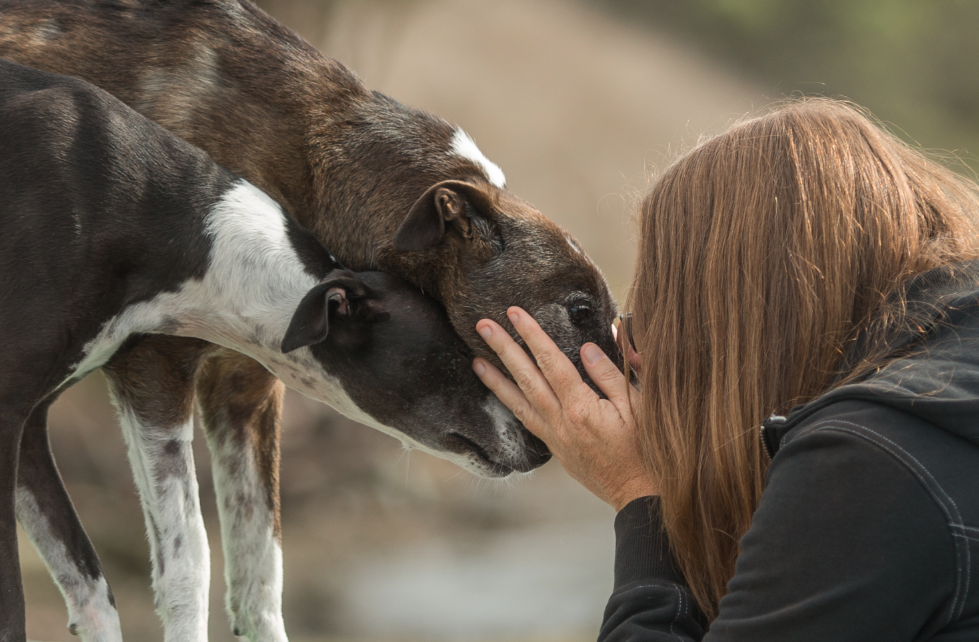
We are drawn to those who make us feel heard. It’s one of the many reasons we love dogs: They’re excellent listeners. Their pricked ears and tilted heads are so powerful, they can conduct therapy and teach kids to read. Words flow easily when we feel safe, appreciated, and free from judgment. It’s about time we return the favor. Listening is not passive, it's an activity, a skill. When done right, it removes friction, dissolves tension and makes problems figure-outable. Shut down dogs come alive, and frantic dogs are soothed as they turn into confident speakers, capable of making themselves understood. Refining your listening skills opens the door to conversations you didn’t realize you needed to have, and interactions you didn't think were possible.

Testimonials & Reviews

Read All Testimonials

New class for the February 2026 session.

Registration

Next session starts: February 1, 2026
Registration starts: January 22, 2026
Registration ends: February 15, 2026

Registration opens at 10:00am Pacific Time.

SILVER LEVEL Testing Project for February 2026 - In this session students will be permitted to submit ONE 90 second video per week when registered at the silver level.  All "your dog" specific questions must be accompanied by video so the instructor can assess video and questions together.  Silver students may also ask generic questions and participate in discussion forum threads. 

BH400 Subscriptions


Gold

Silver

Bronze
Tuition $ 260.00 $ 130.00 $ 65.00
Enrollment Limits 12 35 Unlimited
Access all course lectures and materials ✔ ✔ ✔
Access to discussion and homework forums ✔ ✔ ✔
Read all posted questions and answers ✔ ✔ ✔
Watch all posted videos ✔ ✔ ✔
Post general questions to Discussion forum ✔ ✔ ✖
Submit written assignments ✔ ✖ ✖
Post dog specific questions ✔ With video only ✖
Post videos ✔ Up to 2 ✖
Receive instructor feedback on
  • Questions
  • All videos
  • Questions
  • All videos
✖

Find more details, refund policies and answers to common questions in the Help center.

  • Prev
  • Next
  • FDSA
    • About Us
    • What Do We Teach?
    • Faculty & Staff
    • Testimonials
    • Privacy Policy
  • Student Resources
    • Calendar
    • Scholarships
    • Gift Certificates
    • Swag
    • Trainer Certificates
  • Courses
    • Class Schedules
    • By Instructor
    • By Discipline
    • Prerequisites
    • Self Study
  • Webinars
    • Schedule
    • Webinar Courses
    • Register
  • More Learning
    • Podcast
    • Blog
    • Puppy Book
    • Private Lessons
    • Team
  • Help!
    • Getting Started
    • Enrolled Students
    • Video & Images
    • Webinars

Copyright © Fenzi Dog Sports Academy and individual instructors.

Technical support - send email to help@fenziacademy.com

Connect with us! facebook-icon email-icon instagram-icon