When you first look at all of the Master Rally signs, it can feel a little overwhelming. There are a lot of signs, some of them are pretty complicated, and it's easy to look at that list and think about how many new things you need to teach your dog.
But here's the good news. Your dog doesn't actually need to learn every Rally sign as a completely separate behavior. Many of those signs are made up of the same skills used in different ways. If we spend our time teaching those skills really well, suddenly that long list of Master signs becomes a whole lot less intimidating.
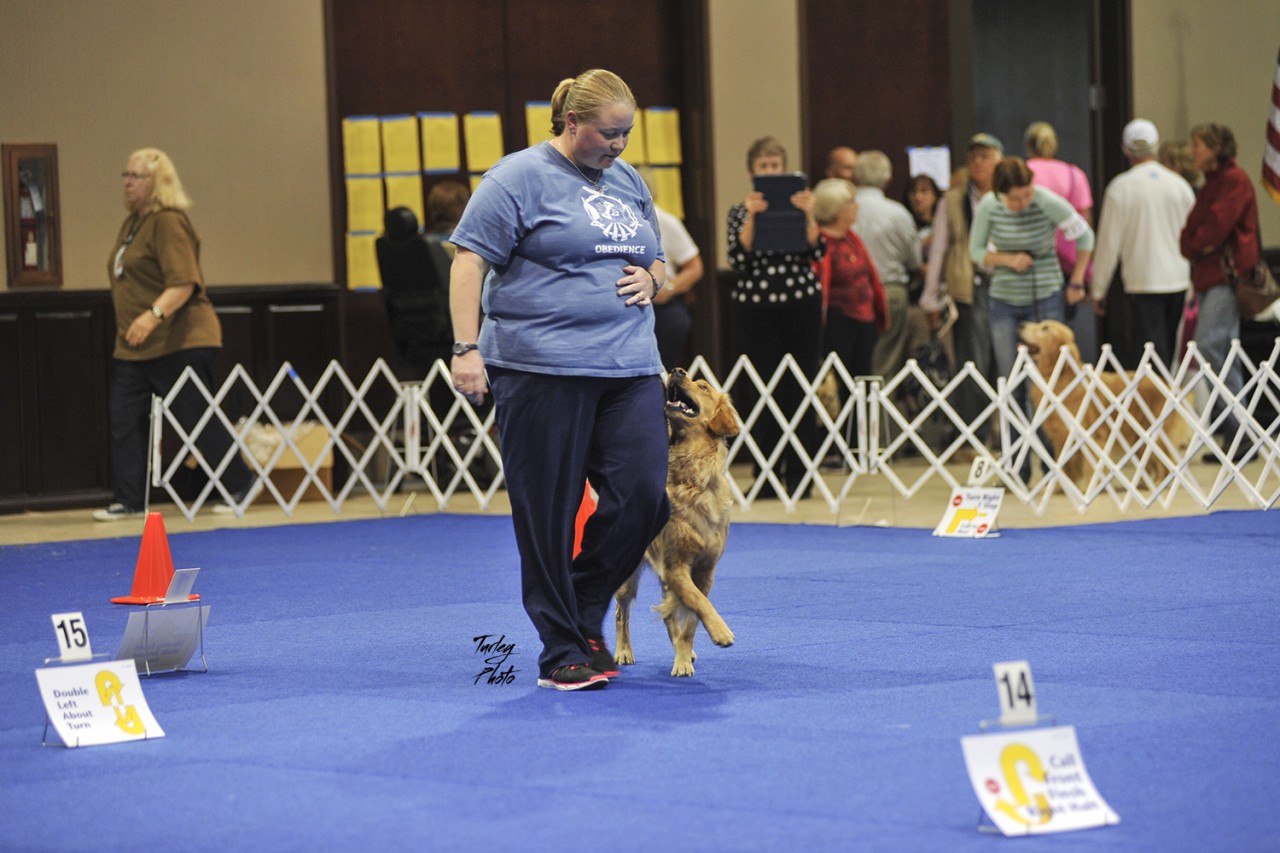
This is how I like to teach Rally. Rather than working my way through the sign list and teaching one complete sign after another, I spend a lot of time thinking about the skills that make up those signs. Once my dog understands those individual pieces, we can start putting them together in all sorts of different combinations.
What's Really in That Sign?
When you're struggling with a Rally sign, one of the first things I want you to do is stop looking at the sign as one big behavior. Instead, look at all of the little pieces your dog needs to perform it.
Does your dog need to find front position? Do they need to pivot, back up, move laterally, change positions, move around you, or find heel position? Most of those aren't completely new skills. Your dog has seen at least some of them before.
This is one reason I spend so much time on foundation skills in Rally. If my dog really understands the foundation skills, I can build on those and combine them to make up the more complicated Master signs.
The Same Skills Show Up Again and Again
Fronts are a great example. If your dog really understands front position, you've already done a lot of the work you'll need for several Rally signs. As you move up through the levels, we may ask the dog to find front from different angles or after different behaviors, but the basic skill is still the same.
Pivots work the same way. If your dog understands how to move their rear end and maintain position with you, we can take that skill and use it in several different exercises. We don't have to go back and teach rear-end awareness from scratch every time we encounter a new sign.
The same is true for backing, lateral movement, position changes, fronts, finishes, pivots, and heel position. These skills keep showing up, just packaged a little differently. The stronger those individual skills are, the easier it becomes to teach the signs that use them.
When a Sign Isn't Working, Take It Apart
Let's say you're working on a Master sign that has three different pieces and your dog keeps making a mistake. It's really tempting to go back to the beginning and try the whole sign again. And again. And again. Sometimes we get lucky and it improves, but often we're just practicing the same mistake.
Instead, figure out which piece is actually causing the problem. Can your dog perform each skill by itself? Can they do each skill from different positions or when your body looks different?
You may discover that what looked like a problem with the Master sign really isn't about that sign at all. There's just one piece your dog doesn't understand quite as well as you thought they did. Now you have something specific to work on rather than continuing to practice the entire sign and hoping it gets better.
Now Put the Pieces Back Together
Once the individual skills are solid, it's time to start putting them together. If a sign has several pieces, I don't necessarily go straight from practicing those pieces individually to performing the entire sign. I might put two behaviors together first, then add another one once that's going well.
Eventually, those individual pieces become the complete sign. Then we can start adding that sign into short sequences with other signs. Little by little, we're building toward the dog being able to work through an entire Rally course without reinforcement at every sign.
This is also where you'll find out whether your dog really understands those individual behaviors. Performing a front by itself in your training space is one thing. Performing that same front after heeling through several other signs is a different picture, and that's something we need to prepare our dogs for too.
Master Rally Doesn't Have to Be Overwhelming
When you look at the Master Rally sign list, don't think about how many individual signs you need to teach. Start looking for the skills that show up over and over again. Figure out which ones your dog already understands well and which ones could use a little more work.
Your dog may have fantastic fronts but struggle with lateral movement. Maybe their pivots are great, but backing is still a work in progress. Or maybe all of those individual skills look great, but things start to fall apart when you put several behaviors together. Each of those situations gives you useful information about what you should work on next.
So the next time you come across a Master sign that has you scratching your head, instead of asking, "How am I going to teach my dog this sign?" take another look at it and ask, "What skills does my dog need to know to do this sign?"
You may find that your dog already knows more of it than you thought.