If you've ever searched for how to get your dog to pay attention, you've probably come across the same advice over and over again. Teach a "watch me" cue. Say your dog's name. Make noises. Wave a cookie. If they look away, find a way to get their attention back.
There's nothing inherently wrong with any of those suggestions, and there are certainly times when they're useful. The problem is that they don't answer the question I think matters most. Before I ever ask my dog for a sit, a down, or a heel position, I want to know whether they're mentally available for learning. Instead of asking, "How do I get my dog to pay attention?" I've learned to ask a completely different question.
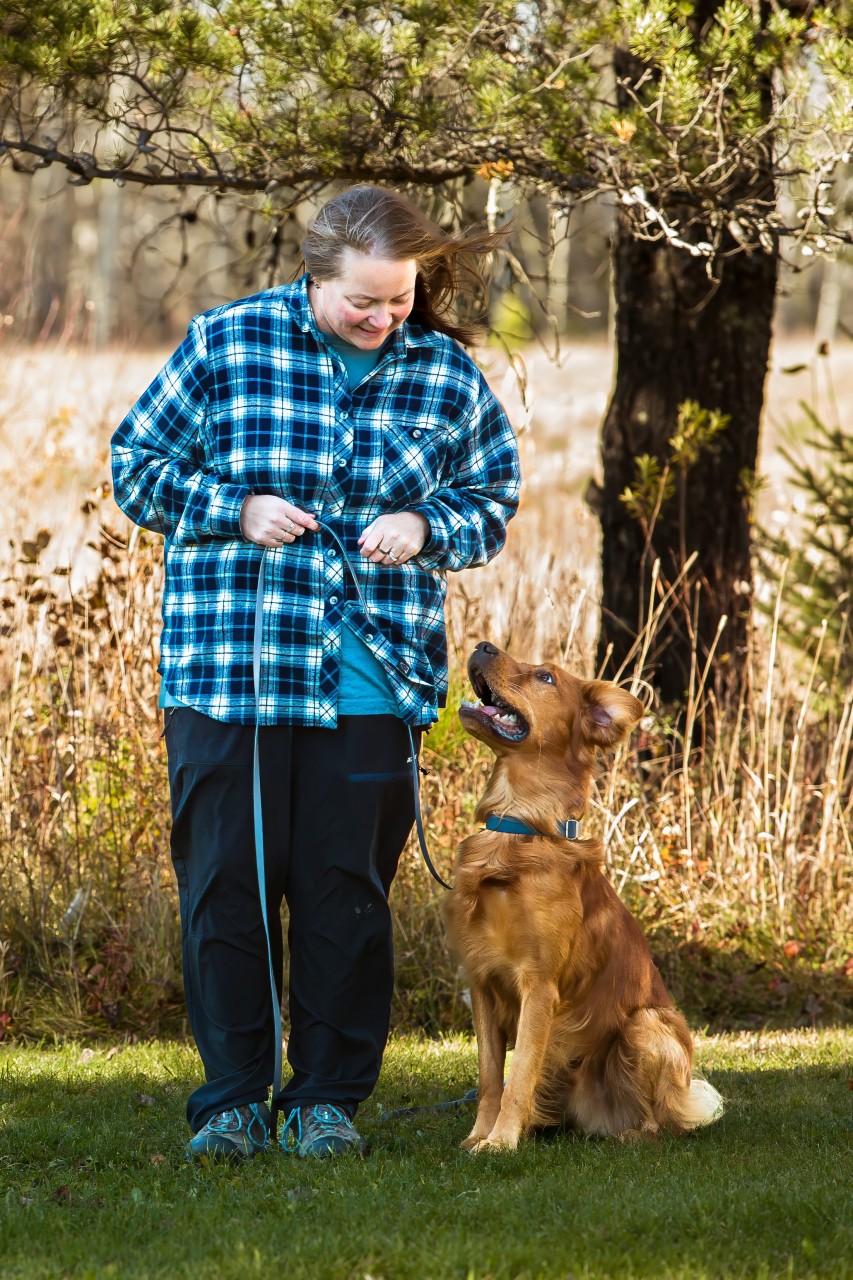
Where's your brain?
I'm not asking whether my dog is looking at me. I'm asking whether they're mentally present. Are they ready to learn? Are they engaged in the conversation we're about to have, or are they simply standing next to me while thinking about everything else happening around them? That distinction has completely changed the way I approach training because attention that has to be constantly requested isn't the same thing as genuine connection.
Looking at You Isn't the Same as Being Connected
One of the easiest mistakes to make is assuming that eye contact and connection are the same thing. They certainly overlap, but they aren't interchangeable. A dog can look directly at you without really being mentally engaged, just like we've all sat through a meeting while thinking about something completely different. Physically we were present, but mentally we were somewhere else.
Dogs can do exactly the same thing. They can perform a familiar cue because they've practiced it hundreds of times, even though their attention is drifting toward another dog, an interesting scent, or the squirrel running across the yard. If we only judge the training session by whether the dog completed the behavior, it's easy to miss what's really happening.
To me, a connected dog is mentally present. They voluntarily check back in after reinforcement. They stay engaged because working with their handler has become an important part of the game, not because they're constantly being reminded to look. That's a much different picture than a dog who only reconnects after hearing their name several times.
The Five Seconds That Tell You Everything
When most people evaluate a training session, they naturally focus on the behavior itself. Did the dog sit? Did they come when called? Did they heel nicely? Those things matter, but they aren't always the first thing I'm watching.
Instead, I pay close attention to what happens after reinforcement.
Your dog earns the cookie, swallows it, and then makes a decision. Some dogs immediately turn back toward their handler, ready for the next piece of information. Others begin sniffing the ground, looking around the room, or searching for something more interesting to do. That single moment tells me far more about the dog's level of connection than the sit or down they just performed.
If my dog consistently disconnects after every reward, I don't assume they're being stubborn or that they suddenly forgot how to work. I see it as information. My dog is telling me they haven't yet learned that staying connected is part of the game, and that's something I need to teach before I worry about making the behavior itself more difficult.
Why More Obedience Isn't Always the Answer
This is where I think many training plans unintentionally go off track. A dog begins struggling around distractions, so we practice more sits, more downs, more recalls, and more stays. We assume the behavior is falling apart when, in reality, the dog may never have been mentally available to perform it in the first place.
You've probably experienced this on a walk. Your dog knows how to sit in your kitchen, but outside they're so busy watching squirrels, greeting people, or following interesting smells that it's as if they've never heard the cue before. The easy conclusion is that they need more obedience training. Sometimes that's true, but just as often they need help reconnecting before they're capable of learning anything new.
Imagine trying to explain something important to a friend who's constantly looking over your shoulder at everything happening behind you. You could repeat yourself several times or find different ways to explain the same idea, but none of those things solve the real problem. Until they're actually part of the conversation, very little communication is taking place. I think the same thing is true for our dogs.
Connection Is a Skill We Teach
One of my favorite things about dog training is that connection isn't something dogs either have or don't have. It's not a personality trait, and it isn't reserved for naturally attentive dogs. Like every other skill we teach, connection develops through thoughtful practice, clear communication, and reinforcement that helps dogs discover that staying engaged with us is worthwhile.
Dogs learn that checking back in leads to information. They learn that reinforcement isn't the end of the conversation. They learn that even when the environment is exciting, staying connected with their handler consistently leads to more opportunities, more success, and more reinforcement. Over time, reconnecting becomes just as much a habit as sitting when asked.
When that happens, we stop worrying so much about how to get our dogs to pay attention because attention becomes the natural result of a dog who values staying connected.
Start Every Training Session with a Different Question
The next time you get ready to train, resist the temptation to immediately ask for a behavior. Before you cue a sit, a down, or a heel position, take a moment to ask yourself a different question.
Where's your dog's brain?
If they're mentally present and ready to engage, almost everything else becomes easier. If they aren't, you've learned something valuable before the training session has even begun. Instead of spending the next ten minutes trying to recover your dog's attention, you can spend that time building the connection that makes attention happen naturally.
If you've been wondering how to get your dog to pay attention, you may discover that the answer isn't asking for attention at all. The answer is teaching your dog that staying connected with you is the best part of the game.
Connection isn't something dogs are born with. It's something we teach.
If you'd like to learn the games I use to build that kind of connection, I'd love to have you join me for my one-week workshop, 7 Days to a Connected Canine, starting on August 9th. Together we'll work through seven simple exercises that help dogs choose to stay engaged, even when the world around them is competing for their attention.