Following the Multi-Dog Conference, I think a lot of us are eager and ready to begin teaching our dogs how to wait their turns while we train our other dogs! It's such a useful skill for any dog to have, especially in a multi-dog household.
And as much as I support teaching the skill, one thing that I have seen often is that while a handler has good intentions and is rewarding the waiting dog for being patient, they are also simultaneously disengaging from their working dog. And though that may not lead to a big response, I do notice a change in the working dog's behavior whether it's signs of stress, disengagement, or decreased motivation.
So I ask you—have you ever checked with yourself, "how does my working dog feel when I'm also reinforcing or managing my other dog for waiting?"
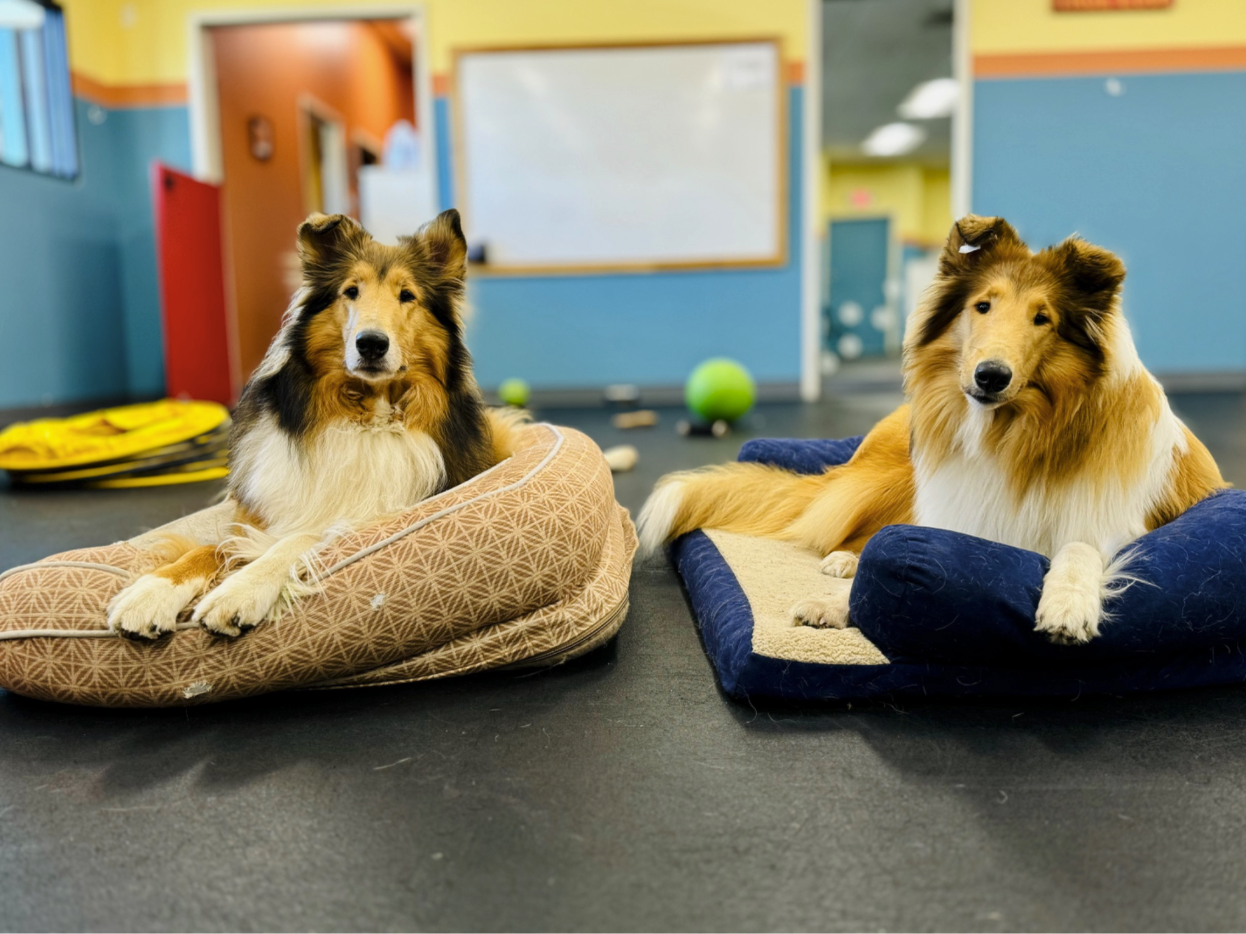
Teaching Your Dogs to Take Turns
Here are some things that I have seen:
- The handler will disengage frequently from the working dog to feed, support, or re-cue the waiting dog. This just leaves the working dog hanging there. Suddenly they have no information on what to do and no handler to tell them. Imagine being taught by someone and they keep turning around to speak to someone else. That can be quite frustrating!
- The session is choppy and without flow. Because of the interruptions and even simply the handler multitasking, the loops aren't clean and a rhythm of progression doesn't occur. It becomes a less than ideal learning environment for the working dog because the training session doesn't feel as fluent as they normally would.
- The working dog finds the behavior of the waiting dog distracting, concerning, or even stressful. I have watched dogs really start to struggle in a session because their housemate is unable to manage their feelings about waiting. Whether it's because the waiting dog is vying for the handler's attention, keeps interrupting the session, or even barking and whining from the other room—all of these behaviors can be distressing for the working dog.
Problem Solving with Your Working Dog
Have a plan for what to do when you need to disengage from your working dog to support your waiting dog! My personal plan is to have an opt-out station during training because if things begin to go haywire, I can just send my working dog to a snuffle mat and then address my waiting dog without any negative feelings creeping in. You don't need to use an opt-out station as I do, but having a plan in place will support your working dog! It may be as simple as teaching your dog that when you say their name, they're the one being fed (versus the other)—or learning to toss treats behind your back!
And of course, the more you make "practicing taking turns" into an intentional training session—rather than squeezed into a "regular" session—the easier you can address these issues directly. This includes demonstrating to your working dog what it means if you disengage midway through a session or rep and supporting your waiting dog with the intention of fading that support over time. By doing that, both will have practiced the sequence enough times that they'll learn to train together without any bad feelings creeping in!